
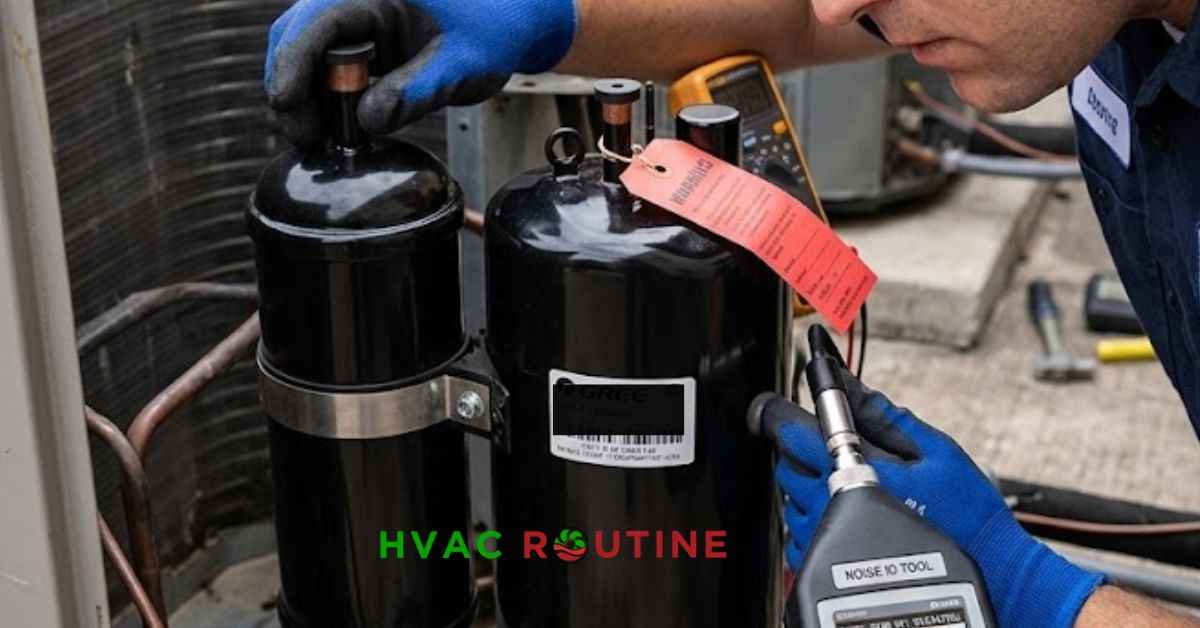
Hearing a sudden grinding or screeching sound when you switch on your air conditioning triggers instant stress. Performing a bad AC compressor noise identification test early protects your system and pocketbook from major damage.
Most compressor noises point directly to specific component failures inside the assembly.
Recognizing these distinct sounds helps you decide whether you need a simple pulley swap or a complete system replacement.
Note: Pulley is a mechanical wheel with grooved edges, on which a ribbon, belt or rope is placed. You will not see a pulley in the compressor of AC and refrigerator. It is used in cars. Since we will discuss the solution to all the problems of compressors, so I am giving a clear idea about the pulley in advance. Because if you do not see a pulley in the compressor of AC and refrigerator, you may be confused. Hopefully, I have been able to clarify the matter for you.
What You'll Learn ⭐⭐⭐⭐⭐
- Tools Required for bad AC compressor noise identification:
- Safety Warnings:
- Step-by-Step Fixes:
- When to Call a Pro:
- Bad AC Compressor Noise Identification Guide
- AC Compressor Sound Chart
- Car AC Compressor Sound Diagnosis (Under-Hood Inspection)
- Noise-to-Cost Estimator: What Your AC Sound Will Cost You
- How to Record Intermittent AC Noises for Your Mechanic
- Residential Home AC Compressor Sound Diagnosis (Outdoor Unit)
- Diagnosing AC Compressor Grinding Noise
- Squealing AC Compressor Clutch Bearing vs Belt Slip
- Why Is Your AC Compressor Clicking On and Off?
- Rattling Sound When Air Conditioner Runs: Causes and Fixes
- Stopping a Hissing High Pressure Refrigerant Leak
- AC Compressor Noise vs Fan Noise: How to Tell the Difference
- How to Perform a Mechanics Stethoscope Diagnostic
- Understanding a Slugged Compressor Hydraulic Lock
- Overlooked Factors That Trigger Unexpected Noise
- Key Takeaways for Long-Term System Health
- Answers to some other questions people ask:
Tools Required for bad AC compressor noise identification:
-
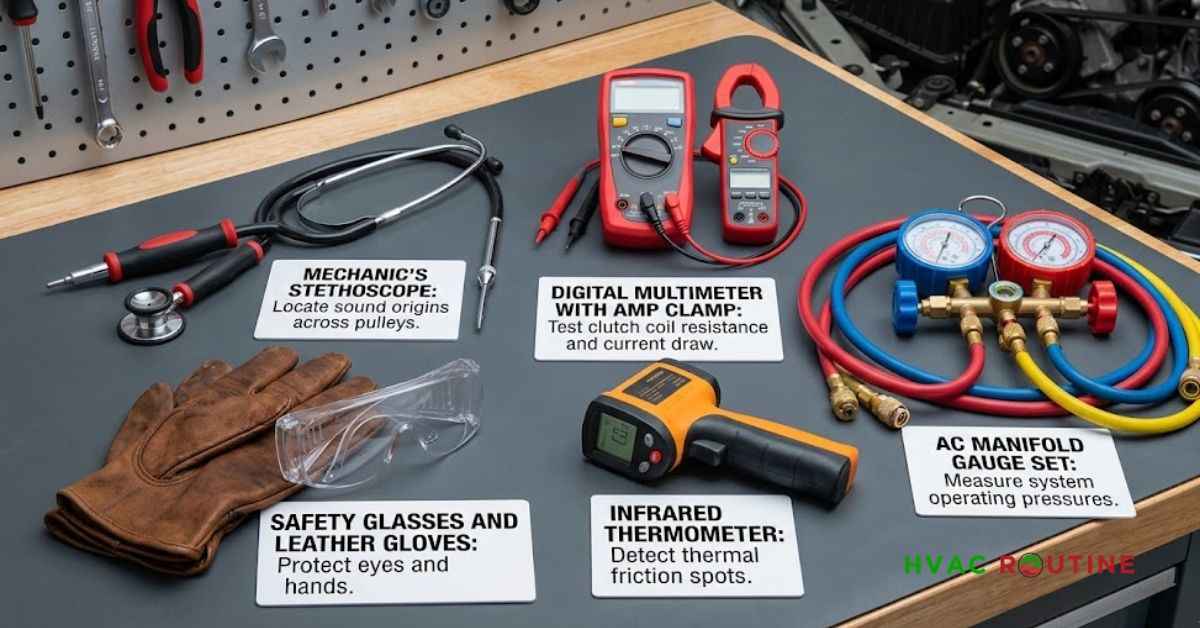
Mechanic’s Stethoscope: You need this tool to locate exact sound origins across spinning pulleys and metal casings.
-
Digital Multimeter with Amp Clamp: You will use this meter to test clutch coil resistance and electrical current draw.
-
AC Manifold Gauge Set: Connect this gauge set to measure high-side and low-side system operating pressures.
-
Infrared Thermometer: Point this sensor at pulleys to detect thermal friction spots caused by failing bearings.
-
Safety Glasses and Leather Gloves: Wear these items to protect your eyes and hands from pressurized refrigerant and hot engine components.
Safety Warnings:
-
Pressurized Refrigerant Danger: Never loosen refrigerant fittings or pressure relief valves without proper EPA-certified recovery equipment.
-
Moving Belt Hazard: Keep your hands, hair, and tools completely away from spinning belts and fan blades during engine operation.
-
High Voltage Shock Hazard: Discharge residential run capacitors safely before touching electrical terminals.
Step-by-Step Fixes:
-
Run the AC Engagement Test: Turn your AC control on and off while watching the compressor clutch to see if the noise changes when the clutch engages.
-
Inspect Belt Alignment and Tension: Check your serpentine belt for looseness, cracks, or glaze that causes high-pitched squealing under load.
-
Perform the Manual Pulley Spin Test: Remove the drive belt and spin the compressor pulley by hand to feel for roughness or side-to-side play.
-
Check Operating System Pressures: Attach manifold gauges to confirm whether knocking stems from extreme head pressure or liquid slugging.
-
Replace Faulty External Components: Swap out bad clutch assemblies, worn relays, or failing capacitors when internal mechanics remain undamaged.
When to Call a Pro:
-
High-Pitched Screaming Sounds: Shut down your system immediately when pressure relief valves vent high-pressure refrigerant.
-
Internal Mechanical Metal Contamination: Call a professional technician when shredded internal pistons scatter metal debris through your lines.
-
Burned Motor Windings: Seek expert help when internal electrical short circuits cause grounded motor windings.
Bad AC Compressor Noise Identification Guide
Mastering bad AC compressor noise identification allows you to pinpoint mechanical failures before total system lockup.
Compressors give off very specific warning sounds when internal components begin to wear down.
By listening carefully to the pitch, frequency, and location of the noise, you can catch minor issues early.
Timely action keeps minor pulley bearing wear from turning into an expensive repair bill.
AC Compressor Sound Chart
| Sound Type | Primary Component Cause | Severity Level | Immediate Action Required |
| High-Pitched Squeal | Worn Clutch Bearing or Loose Belt | Moderate | Inspect belt tension and replace pulley bearing. |
| Metallic Grinding | Disintegrating Pistons or Main Shaft | Severe | Shut off AC immediately to prevent metal debris contamination. |
| Rapid Clicking | Faulty Relay or Improper Clutch Gap | Low to Moderate | Check relay voltage and adjust clutch air gap. |
| Loud Banging / Knocking | Broken Connecting Rod or Liquid Slugging | Critical | Turn off system and check refrigerant charge level. |
| Hissing / Screaming | Pressure Relief Valve Discharge | Severe | Shut down system and call a certified technician. |
| Low-Frequency Humming | Locked Rotor or Failed Run Capacitor | Moderate | Test capacitor microfarads and check motor windings. |
Car AC Compressor Sound Diagnosis (Under-Hood Inspection)
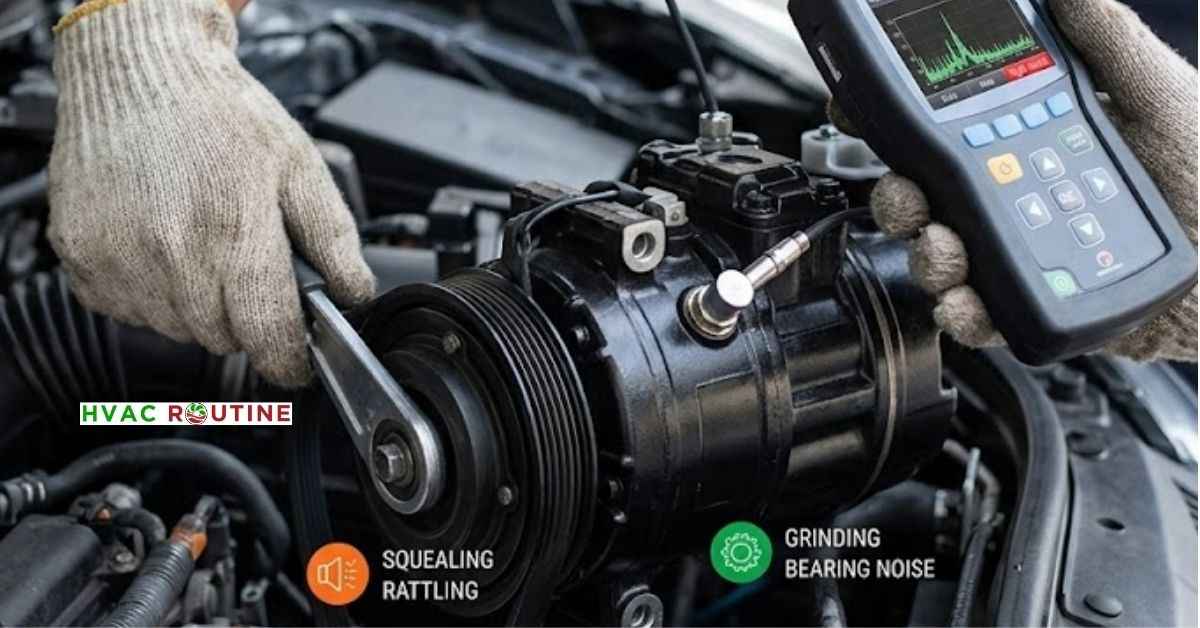
Identifying car AC compressor noises requires checking both engine bay components and cabin controls.
Car compressors run on serpentine belts connected directly to your vehicle’s spinning engine crankshaft.
Understanding where under the hood the noise comes from helps you isolate pulley faults from internal engine bay issues.
Squealing from Serpentine Belts or Pulley Clutch Bearings
-
Sound Description: High-pitched piercing screech when you switch on the cabin AC button.
-
Car-Specific Cause: Slipping serpentine drive belt or dry sealed bearings inside the compressor pulley assembly.
-
Quick Check: Spray a light water mist on the drive belt while the engine runs at idle.
-
Actionable Fix: Replace the serpentine belt if squealing stops instantly, or replace the clutch pulley bearing if screeching continues.
Metallic Grinding from Worn Engine-Driven Pistons
-
Sound Description: Harsh grinding or crunching noise that speeds up as you press the gas pedal.
-
Car-Specific Cause: Low PAG oil levels forcing steel swash plates and pistons to scrape bare metal cylinder walls.
-
Quick Check: Turn off the car AC immediately to prevent metal shavings from traveling through your vehicle’s refrigerant lines.
-
Actionable Fix: Replace the car compressor, accumulator, and expansion valve to flush out metal debris contamination.
Rapid Clicking Under the Dashboard or Fuse Box
-
Sound Description: Fast metallic clicking sound coming from the engine bay or under-dash fuse block.
-
Car-Specific Cause: Low refrigerant pressure causing the AC clutch relay to toggle rapidly on and off.
-
Quick Check: Measure system low-side pressure with an automotive manifold gauge set.
-
Actionable Fix: Recharge the car refrigerant system after finding and sealing hose leaks.
Noise-to-Cost Estimator: What Your AC Sound Will Cost You
Identifying your AC compressor noise early helps you estimate potential repair costs before visiting a mechanic or HVAC technician.
Squealing serpentine belts or loose clutch bearings offer the lowest repair bills if caught immediately.
Internal metallic grinding forces complete system replacement because shredded metal debris spreads through all lines.
Review this breakdown of typical repair costs for car AC systems and home HVAC units based on acoustic symptoms.
| Noise Type | Likely Faulty Component | Estimated Car AC Repair Cost | Estimated Home AC Repair Cost |
| High-Pitched Squeal | Worn Clutch Bearing or Belt | $80 – $200 | $150 – $300 |
| Rapid Clicking | Bad Relay / Air Gap / Solenoid | $30 – $120 | $50 – $150 |
| Low Buzzing / Humming | Failed Run Capacitor / Low Voltage | $100 – $250 | $120 – $250 |
| Metallic Grinding | Destroyed Pistons / Total Lockup | $1,200 – $2,500+ | $1,800 – $3,500+ |
| High Pressure Screaming | Sticking Relief Valve / Clogged Line | $200 – $600 | $300 – $800 |
How to Record Intermittent AC Noises for Your Mechanic
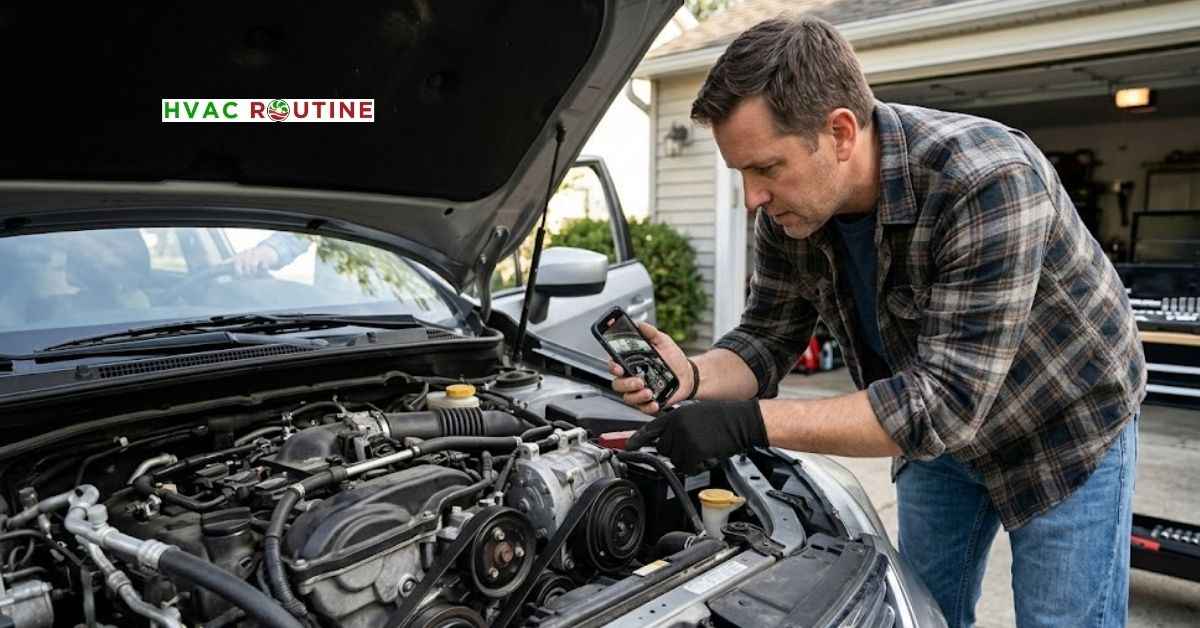
Intermittent compressor noises often disappear right when you drive your car to the repair shop or call a home technician.
Recording a clear video clip on your smartphone provides immediate evidence for your mechanic.
Open your vehicle’s hood safely while the engine runs and hold your phone microphone about six inches from the compressor housing.
Record ten seconds of background engine sound before having someone switch on the AC inside the cabin to catch the exact moment the noise starts.
Show this clear audio recording to your mechanic to save diagnostic time and prevent wrong part replacements.
Residential Home AC Compressor Sound Diagnosis (Outdoor Unit)
Home AC compressors operate inside heavy outdoor metal condenser cabinets under high electrical voltage.
Home systems use stationary electric motors rather than engine drive belts to pump refrigerant.
Separating compressor motor hums from fan motor vibrations gives you clear diagnostic results.
Low Electrical Buzzing or Humming from Outdoor Cabinets
-
Sound Description: Heavy continuous hum coming from the outdoor unit without the compressor motor turning.
-
Home-Specific Cause: Home compressors depend on dual-run capacitors that supply high electrical starting voltage.
-
Quick Check: Inspect the dual-run capacitor inside the side electrical access panel for bulging or leaking fluid.
-
Actionable Fix: Discharge stored high voltage safely and swap out the dead run capacitor with a matching microfarad rating.
Rattling and Thumping Against the Base Pad
-
Sound Description: Loud vibrating or rattling sounds coming from the bottom base of the outdoor unit.
-
Residential Cause: Hardened rubber isolation grommets or loose mounting feet on concrete pads.
-
Quick Check: Press down gently on the top cabinet frame to see if vibrating sounds decrease.
-
Actionable Fix: Replace cracked rubber feet grommets and tighten base mounting bolts to stop vibration transfer.
High-Pressure Screaming or Hissing at the Condenser
-
Sound Description: Loud screaming or escaping gas sound near the compressor housing.
-
Residential Cause: Clogged outdoor condenser coils raising high-side pressure beyond safe operating limits.
-
Quick Check: Look for dirt accumulation or debris blocking airflow across exterior aluminum fins.
-
Actionable Fix: Shut off the main breaker switch immediately and wash dirty condenser fins with a soft coil cleaner spray.
Diagnosing AC Compressor Grinding Noise
An AC compressor grinding noise signals severe mechanical metal-on-metal contact inside the compressor housing.
Swash plates, main shaft bearings, and pistons grind together when internal oil levels drop too low.
This harsh metallic crunching sound gets louder as engine or motor speed increases.
Ignoring this sound will shred internal components and send metal shavings throughout the entire refrigerant loop.
Internal Bearing Disintegration and Piston Failure
Failing main bearings allow internal pistons to wobble off their normal axis.
This alignment loss forces steel pistons to scrape directly against the aluminum cylinder walls.
The resulting metal dust creates a severe condition that mechanics call “black death.”
You must replace the compressor, receiver drier, and expansion valve once this breakdown occurs.
Squealing AC Compressor Clutch Bearing vs Belt Slip
A squealing AC compressor clutch bearing generates a continuous piercing sound from the front of the unit.
This noise often starts the moment you start your vehicle or turn on your home unit.
Many owners mistake a bad clutch bearing for a slipping serpentine belt.
Disentangling these two issues requires a quick physical inspection of the drive belt.
       [ ENGINE / AC SYSTEM ON ]
        │
         Does sound occur only
         when AC clutch engages?
        ┌──────────┴──────────┐
       YES                   NO
        │                     │
  [ Internal Wear /     [ Clutch Bearing or ]
   Piston Damage ]      [ Loose Drive Belt  ]
Identifying Sealed Bearing Breakdown
Sealed ball bearings inside the clutch pulley dry out over time as factory grease leaks past hardened rubber seals.
Dry steel balls rub against the inner race and emit a loud screech.
Spray a light mist of water onto the belt while the engine runs to test for belt slip.
If the squeal stops instantly, replace the belt; if the squeal continues, replace the clutch bearing.
Why Is Your AC Compressor Clicking On and Off?
An AC compressor clicking on and off rapidly usually indicates an electrical control problem or low refrigerant pressure.
You will hear a sharp metallic click as the electromagnetic coil pulls the clutch plate against the spinning pulley.
When this engagement happens every few seconds, your system is short-cycling.
Short-cycling puts immense thermal stress on the clutch coil and wears out the clutch plate faces prematurely.
Electrical Relay Chattering vs Clutch Clearance Issues
A failing compressor relay can chatter rapidly due to pitted internal electrical contacts or low input voltage.
Incorrect air gap clearance between the pulley and clutch plate also causes slipping and clicking.
Measure the air gap using a feeler gauge to ensure it stays within factory specifications.
Replace the relay or adjust the clutch shim pack if the gap exceeds recommended limits.
Rattling Sound When Air Conditioner Runs: Causes and Fixes
A rattling sound when air conditioner runs often stems from loose external mountings or loose pulley covers.
Vibrations from normal motor operation shake loose hardware against nearby metal frames or engine blocks.
Internal clutch dampener springs can also snap, allowing the clutch hub to rattle loosely during operation.
Checking external fasteners first saves you from replacing perfectly good internal components.
Loose Mounting Bolts and Fan Shield Interference
Inspect all four compressor mounting bolts with a socket wrench to ensure proper tightness.
Worn rubber isolation grommets transfer heavy vibrations straight into the cabin framework.
Check nearby fan shrouds and heat shields to ensure they do not touch vibrating AC lines.
Tightening loose bolts and replacing cracked rubber bushings eliminates most external rattling noises instantly.
Stopping a Hissing High Pressure Refrigerant Leak
A hissing high pressure refrigerant leak means high-pressure gas is escaping through a damaged seal or safety valve.
You might hear a soft hiss after turning off the system as pressures equalize across the expansion valve.
However, a loud continuous hiss during active operation signals a serious pressure valve discharge.
System blockages or non-condensable air inside the lines push head pressures into dangerous territory.
Pressure Relief Valve Venting Hazards
High-pressure relief valves vent refrigerant automatically when internal pressures exceed safe limits.
This emergency venting prevents catastrophic housing explosions during extreme pressure spikes.
Never stand directly near the compressor when you hear high-pressure screaming or intense hissing.
Turn off the power immediately and let a trained technician recover the remaining refrigerant safely.
AC Compressor Noise vs Fan Noise: How to Tell the Difference
Comparing AC compressor noise vs fan noise helps you isolate engine bay or condenser unit sounds accurately.
Condenser fan blades create a rhythmic thumping or whirring sound when blade tips warp or hit loose shrouds.
Compressors create higher-frequency mechanical clicks, squeals, or deep grinding tones.
Running simple component isolation tests prevents you from replacing the wrong expensive assembly.
Isolating Motor Shaft Wear from Fan Blade Wobble
Disconnect the electrical plug to the condenser fan motor briefly to test residential outdoor units.
If the loud noise stops immediately while the compressor runs, your fan motor bearings have failed.
In automobiles, turn off the climate control fan while leaving the engine running.
If the sound persists only when the AC button lights up, the compressor assembly holds the fault.
How to Perform a Mechanics Stethoscope Diagnostic
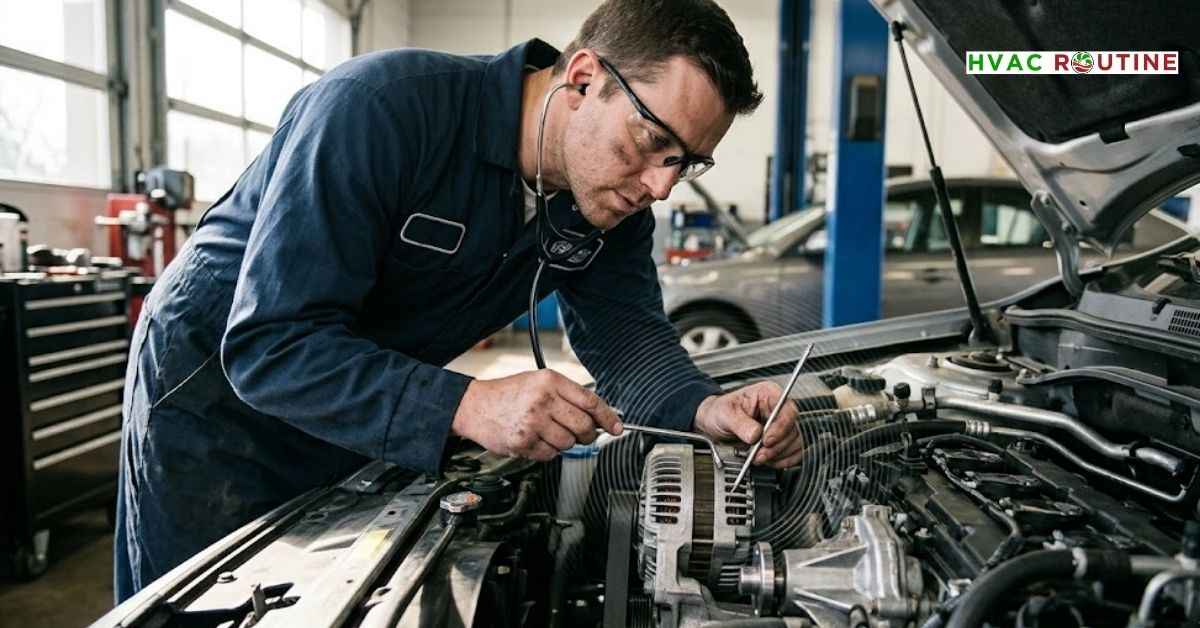
Sound waves travel far better through dense metal shafts than through open air.
Placing the metal probe tip directly on key housing points lets you hear internal friction clearly.
This simple test pinpoints exact bearing failures within seconds.
       [ STETHOSCOPE PROBE PLACEMENT ]
   │
   ┌──────────────────┼──────────────────┐
   │                  │                  │
[ Front Snout ]  [ Main Body ]    [ Rear Cover ]
   │                  │                  │
Clutch Bearing   Piston Wear /    Control Valve /
 Mechanical Noise Swash Plate      Reed Valves
Safe Probe Placement on Housing Snouts and Pulleys
Touch the metal probe carefully to the front nose housing right behind the spinning clutch pulley.
A healthy bearing produces a smooth, low whirring sound through the earpiece.
A damaged bearing sounds like rough gravel tumbling inside a metal drum.
Keep the metal probe completely away from moving belt edges to prevent dangerous tool kickback.
Understanding a Slugged Compressor Hydraulic Lock
A slugged compressor hydraulic lock happens when pure liquid refrigerant or liquid oil enters the compression chamber.
Compressors design parameters allow them to pump gaseous refrigerant only, not incompressible liquids.
When liquid enters the cylinder, the moving piston hits a solid barrier during its upstroke.
This sudden hydraulic impact produces a terrifying loud bang or heavy thumping noise.
How Liquid Refrigerant Destroys Swash Plates and Valves
Hydraulic force from liquid slugging instantly snaps internal connecting rods and warps thin steel reed valves.
Overcharging system refrigerant or failing expansion valves directly causes liquid slugging.
With precise bad ac compressor noise identification, you can catch system liquid floodback before the drive shaft snaps.
Always check system superheat and subcooling values to ensure complete refrigerant vaporization before intake.
Overlooked Factors That Trigger Unexpected Noise
Minor secondary faults often create intense compressor noises that mimic total mechanical failure.
Low oil levels increase friction across internal swash plates, causing loud groaning sounds under load.
Contaminants like moisture or acid break down internal lubricants and trigger rapid bearing wear.
Checking oil quality during regular service visits extends overall compressor lifespan significantly.
Oil Starvation and Contaminant Build-Up
Refrigerant carries special synthetic oil (PAG or POE) continuously through the internal loop.
A slow refrigerant leak drains vital lubricating oil along with escaping gas over time.
Running an oil-starved compressor generates extreme heat, loud groaning noises, and rapid internal scoring.
Adding fresh oil during leak repairs keeps internal surfaces quiet and friction-free.
Key Takeaways for Long-Term System Health
Early diagnostic checks protect major cooling components from complete mechanical destruction.
Pay immediate attention to new squeals, clicks, or grinding sounds coming from your AC unit.
Fixing external clutch bearings or correcting refrigerant levels early saves you from full system flushes.
Regular maintenance ensures quiet, reliable cooling performance through the hottest summer months.
Answers to some other questions people ask:
What are the sounds that indicate a bad AC compressor?
Six distinct acoustic signatures indicate a failing AC compressor: high-pitched squealing, metallic grinding, rapid clicking, loud knocking, intense screaming or hissing, and heavy electrical humming.
1. High-Pitched Squealing or Screeching
-
Worn Clutch Bearings: Dry sealed bearings inside an automotive compressor pulley rub against steel races and emit a continuous piercing screech as soon as you start the engine.
-
Slipping Drive Belts: A loose or worn serpentine belt slips across the spinning compressor pulley under heavy load and generates a sharp squeal when you switch on the air conditioning.
2. Metallic Grinding, Growling, or Crunching
-
Internal Piston Disintegration: Worn main shaft bearings and disintegrating internal pistons produce a harsh crunching sound that speeds up as engine RPM or motor speed increases.
-
Oil Starvation: Low refrigerant levels or oil leaks deprive internal swash plates of lubrication, forcing steel components to scrape bare aluminum cylinder walls.
3. Rapid Clicking or Chattering
-
Short-Cycling Relays: Pitted electrical relays, failing pressure switches, or low refrigerant charges cause the electromagnetic clutch to engage and disengage repeatedly within seconds.
-
Incorrect Air Gap Clearance: Excessive space between the spinning pulley and the clutch plate causes the clutch to slip, chatter, and click rapidly against the hub.
4. Loud Banging, Knocking, or Thumping
-
Hydraulic Lock (Liquid Slugging): Systems that flood liquid refrigerant into the suction port force pistons against an incompressible barrier, triggering a hydraulic impact that snaps connecting rods and warps reed valves.
-
Broken Internal Hardware: Sheared swash plates and loose internal rods slam against the outer housing walls, creating a heavy thumping sound.
5. High-Pressure Screaming or Hissing
-
Pressure Relief Valve Venting: Clogged lines, overcharged refrigerant, or failed condenser fans spike system pressures, forcing high-pressure safety valves to vent refrigerant gas with a loud screaming noise.
-
Housing Seal Leaks: Deteriorated shaft seals, damaged O-rings, or cracked aluminum casings emit a steady high-pitched hiss as pressurized gas escapes into the air.
6. Heavy Low-Frequency Humming or Buzzing
-
Failed Run Capacitors: In residential HVAC units, a blown dual-run capacitor fails to supply starting torque, causing the compressor motor to draw locked rotor amperage and hum loudly without turning.
-
Sticking Solenoid Valves: Modern clutchless variable-displacement car compressors utilize electronic control solenoids that buzz rapidly when internal debris jams the valve mechanism.
7. Vibrating Rattles or Clattering
-
Loose Mounting Hardware: Unbolted compressor housing feet vibrate continuously against metal engine blocks or concrete pads.
-
Hardened Isolation Bushings: Cracked rubber grommets fail to absorb normal motor operation, transferring heavy operational rattles directly into the vehicle cabin or home framing.
How to confirm if an AC compressor is bad?
Confirm a bad AC compressor using five practical diagnostic checks:
-
Listen for Mechanical Noise: Harsh metallic grinding, loud clattering, or screeching signals destroyed internal pistons or dry shaft bearings.
-
Inspect Clutch Engagement: Watch the center clutch hub on vehicle compressors. A stationary hub while the drive belt spins indicates a burnt electromagnetic coil or locked shaft.
-
Measure Operating Pressures: Hook up a manifold gauge set. Equal high-side and low-side pressures while the system runs confirm blown internal pump valves.
-
Test Electrical Continuity: Use a digital multimeter to check clutch coil resistance or test compressor motor terminals for short-to-ground faults.
-
Check for Oil Leaks: Search for dark refrigerant oil pooling along housing seams or front shaft seals.
What are the symptoms of a bad AC compressor bearing?
High-Pitched Screeching and Metallic Grinding:
A failing AC compressor bearing reveals itself immediately through distinct mechanical noises coming from the front of the compressor housing. The primary symptom is a high-pitched squealing or screeching sound that occurs when internal factory grease leaks past hardened seals, leaving steel ball bearings to rub against dry metal races. In automotive systems, a worn pulley bearing creates a continuous screech whenever the engine runs, even when you switch off the climate control system inside the cabin. As physical bearing degradation worsens over time, this high-pitched screeching quickly degrades into a harsh metallic growling that increases directly with engine speed.
Pulley Wobble and Drive Belt Damage:
Physical instability in the front pulley snout serves as another unmistakable warning sign of internal bearing destruction. As steel bearings wear down and lose their precise spherical shape, the outer pulley hub develops lateral play and begins to wobble on its mounting shaft. This wobbling motion throws the drive belt out of alignment, causing rapid edge wear, rhythmic belt chirping, and eventual belt detachment. Furthermore, the intense friction generated by a dry bearing transfers massive heat through the clutch plate, often producing a strong burning rubber smell right before the bearing seizes completely.
Complete Pulley Seizure and Manual Diagnostic Checks:
A completely frozen bearing halts pulley rotation entirely, posing a severe threat to your entire accessory drive system. When a bearing locks up while the engine runs, the spinning serpentine belt drags violently across the stationary pulley, producing dense smoke and snapping the belt within seconds. You can easily confirm a bad bearing by slipping off the drive belt and rotating the compressor pulley by hand. A healthy bearing spins smoothly and silently, whereas a failing bearing feels gritty, wobbles noticeably on its center axis, and emits a loose raspy rattle.
How to identify AC noise?
You identify AC noise by isolating its exact location, pitch, and timing during system startup. First, toggle your climate control switch on and off while standing near the engine bay or outdoor condenser unit. If the noise starts only when the compressor engages, focus your diagnosis on internal pistons, swash plates, or refrigerant pressure anomalies. If the sound continues while the compressor disengages, inspect external parts like spinning pulley bearings, warped fan blades, or loose serpentine belts. Touching a mechanic’s stethoscope against metal component housings helps you pinpoint hidden friction with precision.
Categorize the sound to confirm the exact system failure:
-
High-Pitched Squealing: Loose serpentine belts slip across pulleys, or dry clutch bearings rub against metal races.
-
Metallic Grinding: Shredded internal pistons or low lubricant levels scrape bare metal cylinder walls.
-
Rapid Clicking: Short-cycling electrical relays or improper clutch gaps toggle the magnetic hub rapidly.
-
Loud Knocking: Unevaporated liquid refrigerant floods the compression chamber and slams against internal valves.
-
Heavy Humming: Blown run capacitors force motor windings to draw high electrical current without rotating the motor shaft.

2 thoughts on “Bad AC Compressor Noise Identification: The Acoustic Diagnostic Guide”