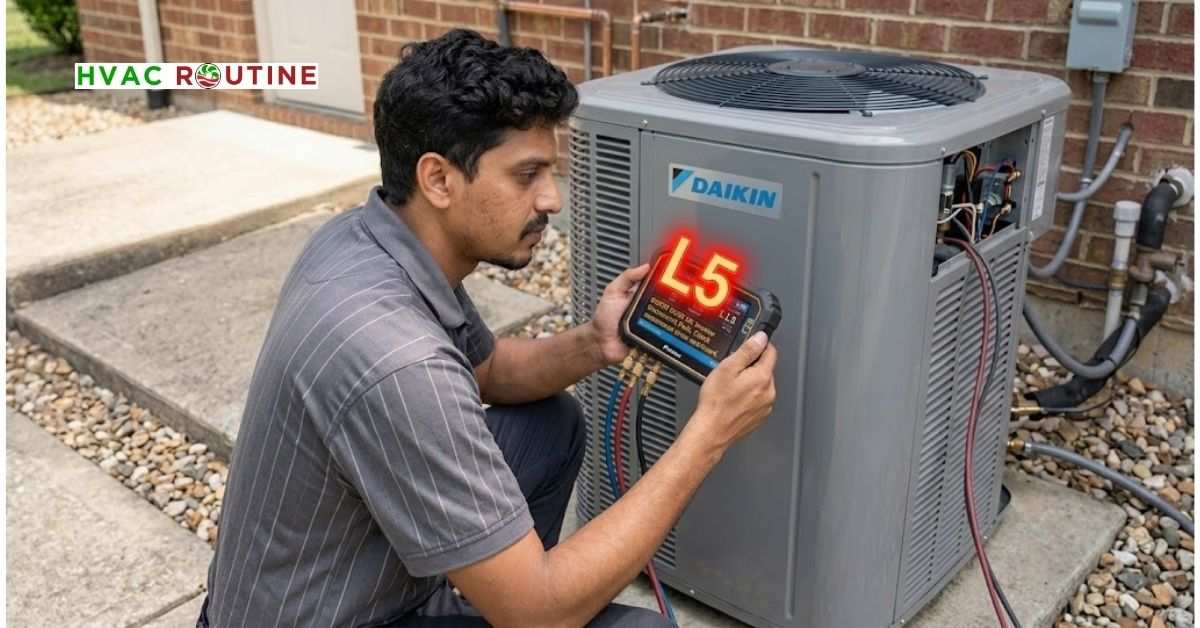
There is nothing quite as frustrating as watching your air conditioner shut down on a sweltering day, only to find the Daikin L5 error code flashing on your thermostat. While this alert definitely signals a serious electrical fault out at the condenser, do not panic and assume you need a whole new system just yet.
That sudden shutdown is actually your outdoor printed circuit board (PCB) doing its job perfectly. The board cuts power in milliseconds when it detects a massive, dangerous spike in electrical current heading toward the compressor motor. This lightning-fast reaction stops the compressor from literally melting its own internal wiring and prevents a major fire hazard outside your home. I will walk you through exactly what triggers this sudden overcurrent and show you the exact diagnostic steps to track down the root cause without wasting time.
Tools Required:
- A digital multimeter with an amp clamp (preferably True-RMS).
- A megohmmeter (megger tester) to test internal motor windings.
- A standard flathead and Phillips screwdriver set.
- Hex keys to check the service valves.
- A refrigerant manifold gauge set to check system operating pressures.
Safety Warnings:
- High-voltage electrical components present severe electrocution risks.
- You must isolate power at the main circuit breaker before you remove the outdoor access panels.
- Wait at least 15 to 20 minutes after turning off the power to allow the large inverter capacitors to discharge their stored energy completely.
When to Call a Pro:
You should call a certified HVAC technician if the compressor fails the electrical resistance test or if the refrigerant system requires pressure adjustments. Replacing the main outdoor printed circuit board also requires specific factory parts and expert calibration.
What You'll Learn ⭐⭐⭐⭐⭐
- What the Daikin L5 Error Code Means for Your AC Unit
- The Inverter Instantaneous Overcurrent Explained
- How the Outdoor PCB Protects Your System
- How to Safely Reset the Daikin L5 Error Code
- Primary Triggers Behind the Daikin L5 Error Code
- Dirty Condenser Coils and Airflow Restrictions
- Closed Stop Valves on Fresh Installations
- AC Refrigerant High Pressure
- Short-Circuited Wiring and Melted Insulation
- Outdoor PCB IPM Failure
- A Grounded or Locked Compressor
- Step-by-Step Daikin AC Troubleshooting Guide
- Initial Safety Checks and Power Isolation
- Inspecting the Condenser Fan and Coil
- Testing the U, V, and W Compressor Wires
- Performing an HVAC Compressor Winding Test
- Evaluating the Outdoor PCB Output
- Can You Temporarily Bypass the Outdoor PCB?
- Repair Costs and Component Replacement Options
- Fixing the PCB versus Replacing the Compressor
- Warranty Considerations for Daikin Systems
- Preventative Maintenance to Stop Electrical Faults
- Installing Surge Protectors for HVAC Systems
- Scheduling Routine Coil Cleanings and Inspections
- Common Reader Inquiries
- Can a dirty air conditioner cause the L5 fault?
- How do I know for sure if my compressor is dead?
What the Daikin L5 Error Code Means for Your AC Unit
The Inverter Instantaneous Overcurrent Explained
The inverter drive constantly monitors the power going into the compressor motor. When the motor has to work too hard, it pulls an abnormal amount of amps in a fraction of a second. This sudden power spike forces the system to trigger a Daikin inverter AC fault to protect the equipment.
How the Outdoor PCB Protects Your System
Think of the outdoor control board as the brain of your air conditioner. When it senses a sudden electrical spike, it shuts the entire system down within milliseconds. This built-in safety protocol stops the compressor from burning itself out and keeps dangerous electrical hazards far away from your home.
How to Safely Reset the Daikin L5 Error Code
Sometimes a random power grid surge triggers a false alarm. You can attempt a hard reset to clear the system memory safely, but you must do it correctly. First, turn off the thermostat inside your house. Next, flip the main outdoor circuit breaker to the off position.
You must wait exactly 15 to 20 minutes before turning the power back on. This waiting period gives the high-voltage capacitors on the inverter board enough time to bleed off their stored energy completely. Turn the breaker back on and start the air conditioner. If the L5 error returns immediately, do not reset it again. Repeatedly resetting the breaker will force extreme electrical loads through damaged components and permanently destroy your compressor.
Primary Triggers Behind the Daikin L5 Error Code
Dirty Condenser Coils and Airflow Restrictions
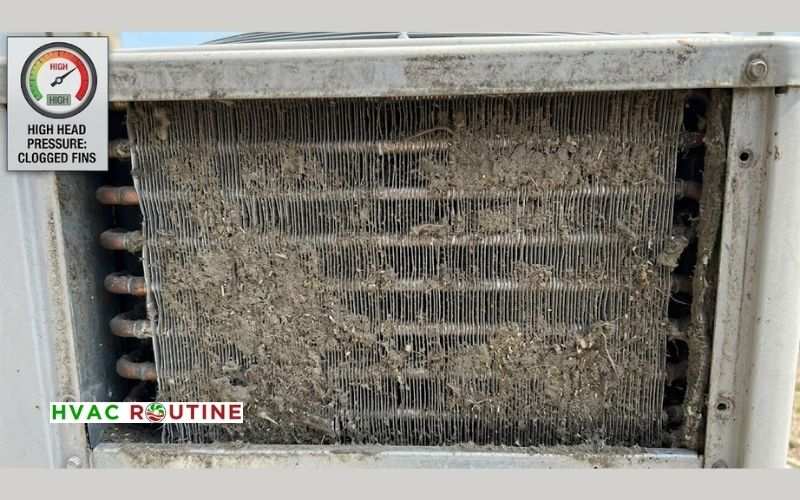
Dirt, leaves, and debris often block the aluminum fins on the outdoor unit. A lack of airflow forces the compressor to push harder to reject heat into the outside air. This extra mechanical effort increases head pressure and draws more electrical current than the system can handle.
Closed Stop Valves on Fresh Installations
Installers sometimes make the mistake of leaving the service valves closed during a fresh setup. The compressor then tries to pump refrigerant against a solid metal wall. This immediate restriction triggers the compressor overcurrent protection right at startup.
AC Refrigerant High Pressure
Adding too much refrigerant raises the internal pressure of the entire cooling system. The compressor exceeds its rated current draw trying to move this heavy liquid load. Inverter systems require precise, factory-weighed refrigerant levels to operate safely.
Short-Circuited Wiring and Melted Insulation
Three main power wires connect the control board directly to the compressor. Over time, vibration or extreme heat can damage these wires, creating a direct short circuit against the copper refrigerant lines. This short trips the Daikin L5 error code instantly.
Outdoor PCB IPM Failure
Lightning strikes and grid voltage spikes frequently damage the delicate Inverter Power Module chip on the control board. A fried chip misreads the electrical current completely. This hardware damage forces the board to send a false error code, even if the compressor itself is perfectly fine.
A Grounded or Locked Compressor
Sometimes, the mechanical parts inside the compressor jam together due to a lack of lubrication or extreme wear. The motor tries to spin but cannot move the locked metal components. This massive electrical effort pulls a huge amount of amps and shuts the unit down immediately.
Step-by-Step Daikin AC Troubleshooting Guide
Initial Safety Checks and Power Isolation
You must turn off the main breaker before starting any Daikin outdoor unit repair. Use your multimeter to verify zero voltage at the incoming power terminals. Never assume the power is off just because the condenser fan stopped spinning.
Inspecting the Condenser Fan and Coil
Walk around the outdoor unit and remove any tall grass, leaves, or trash. Spin the fan blade gently with a stick to ensure the motor turns freely. Wash the aluminum fins carefully with a standard garden hose to clear out deep dirt and restore proper airflow.
Testing the U, V, and W Compressor Wires
When I check inverter units out in the field, I always inspect the U, V, and W power wires before tearing into the heavier, more expensive components. Look closely at the spade terminals on the electrical harness that connects to the compressor.
Loose wire lugs cause microscopic electrical arcing that generates intense, localized heat. I have seen that tiny, continuous arc trip the overcurrent sensor and throw an L5 code before the control board actually takes any physical damage. If you spot melted plastic connectors or scorched, brittle wire insulation, you must replace the harness entirely before turning the breaker back on.
Performing an HVAC Compressor Winding Test
You need a megohmmeter to truly test the internal motor windings of an inverter compressor. A standard, cheap multimeter simply will not cut it because it misreads the synthetic DC pulses and gives false diagnostic data.
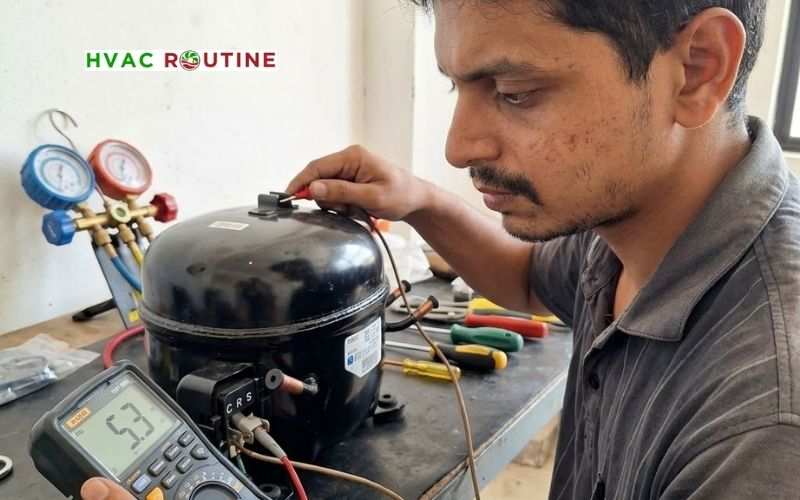
To run the test, connect one megger probe to a clean, unpainted spot on the copper pipe and touch the other probe to the compressor terminals. The tool pushes a high voltage through the windings to find microscopic breaks in the insulation. If the reading drops straight to zero, the internal motor has shorted directly to the metal casing. A grounded compressor is permanently dead, meaning you have to swap the heavy equipment out.
Evaluating the Outdoor PCB Output
Technicians often disconnect the compressor wires safely, insulate the ends, and turn the power back on. They watch the control board to see if it still flashes the error code. An active error with an unplugged compressor proves the printed circuit board itself failed and requires a replacement.
Can You Temporarily Bypass the Outdoor PCB?
Many homeowners ask if they can run the air conditioner straight from the breaker to bypass a broken control board. You absolutely cannot run a Daikin inverter compressor Direct-On-Line. Traditional single-stage compressors use simple alternating current directly from your electrical panel, but Daikin inverter compressors use complex brushless direct current motors.
The Inverter Power Module takes your home’s alternating current, converts it to direct current, and sends precise variable pulses to the compressor. Plugging standard wall voltage directly into an inverter compressor will instantly melt the internal copper windings and destroy the unit. You must replace the broken printed circuit board to restore operation.
Repair Costs and Component Replacement Options
Fixing the PCB versus Replacing the Compressor
A new printed circuit board usually costs between $400 and $800, depending on your exact Daikin model and local supply rates. Replacing a compressor requires recovering the old refrigerant, welding new copper lines, and pulling a deep vacuum. This heavy labor pushes total compressor replacement costs anywhere from $1,200 to $2,000. You should always have a technician test the board output before you assume the most expensive part broke.
Warranty Considerations for Daikin Systems
Most modern systems carry a generous parts warranty if you registered the equipment properly after installation. You can verify your coverage through official manufacturer warranty lookup tools online. Keep in mind that standard warranties rarely cover the hourly labor fees charged by the HVAC contractor.
Preventative Maintenance to Stop Electrical Faults
Installing Surge Protectors for HVAC Systems
You should install a dedicated HVAC surge protector directly at the outdoor disconnect box. This device defends the sensitive inverter boards against lightning strikes and neighborhood power surges. It absorbs the excess voltage before it reaches your expensive air conditioner.
Scheduling Routine Coil Cleanings and Inspections
You need to wash the outdoor coils thoroughly every spring before the cooling season begins. Regular maintenance keeps head pressure normal and greatly reduces electrical stress on the inverter drive. A clean system runs efficiently, draws fewer amps, and extends the life of your entire equipment setup.
Common Reader Inquiries
Can a dirty air conditioner cause the L5 fault?
Yes, blocked airflow directly causes this electrical shutdown. Last summer, I responded to a service call where a homeowner built a tight wooden fence directly around their Daikin condenser to hide it from view. The fan could not push the hot air away, causing the system to suck the same hot air back through the aluminum fins.
This trapped heat caused the refrigerant pressure to spike violently. The compressor had to work twice as hard to pump the high-pressure gas, pulling excessive amperage. The control board detected this sudden electrical draw and threw the Daikin L5 error code to stop the motor from catching fire. Simply removing the wooden boards and washing the thick dirt off the coils fixed the entire problem without replacing a single part.
How do I know for sure if my compressor is dead?
You need a megohmmeter to prove the compressor failed internally. A standard multimeter only uses a tiny 9-volt battery to check basic continuity. A megohmmeter pushes up to 500 volts through the windings to find microscopic insulation breaks hidden deep inside the motor. If the tool shows resistance dropping straight to zero when touching the copper pipe, the internal motor has shorted to the metal casing. At that point, no repair magic will save it, and you must replace the equipment completely.