
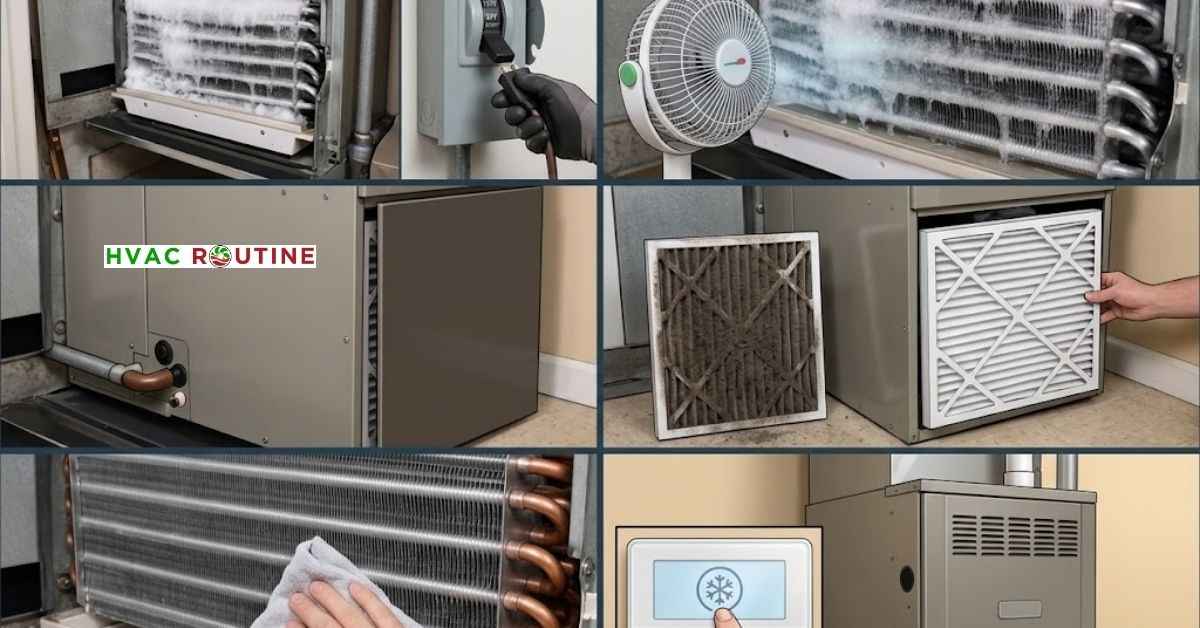
You walk over to your supply register expecting crisp, cold air on a hot afternoon, but you feel a weak trickle of warm humidity instead. You pull the service panel off your indoor air handler and find a thick, solid block of white ice encasing the metal fins.
Following the proper frozen evaporator coil defrosting steps immediately prevents catastrophic mechanical failure and saves your cooling equipment.
Running an air conditioner in this state forces unevaporated liquid refrigerant backward into the pump, which leads directly to severe compressor breakdown.
What You'll Learn ⭐⭐⭐⭐⭐
- Preparation, Safety Warnings, and Quick Action Plan
- Tools Required
- Safety Warnings
- Step-by-Step Fixes at a Glance
- When to Call a Pro
- 5 Frozen Evaporator Coil Defrosting Steps for Homeowners
- What Determines Your AC Frozen Coil Thaw Time?
- Why Did My AC Freeze Up? Root Causes Behind the Frost
- The Hidden Danger: Liquid Slugging Compressor Damage
- Practical Troubleshooting Example: Sarah’s Attic Air Handler
- Simple Preventative Maintenance for Year-Round Comfort
Preparation, Safety Warnings, and Quick Action Plan
Tools Required
- Old bath towels and a shallow drain pan to catch melting runoff.
- A wet-dry shop vacuum to clear clogged drain lines.
- A fresh replacement air filter with matching system dimensions.
- A soft nylon bristle brush and self-rinsing foaming coil cleaner.
- A standard nut driver or screwdriver set to open the cabinet panel.
Safety Warnings
- Cut high-voltage electrical power at the main breaker panel before touching indoor components.
- Never scrape or chop ice with screwdrivers, butter knives, or metal scrapers.
- Puncturing thin aluminum fins or copper tubes releases pressurized refrigerant and destroys the entire coil assembly.
- Avoid using high-heat blow dryers or heat guns, because extreme heat shocks the metal joints and cracks soldered seams.
- Melting ice generates several gallons of water, so monitor the indoor unit closely to prevent ceiling and floor damage.
Step-by-Step Fixes at a Glance
Time needed: 4 hours
A safe, step-by-step DIY guide to thaw an iced-over AC evaporator coil, clear drain lines, and restore cold airflow without damaging your compressor.
- Switch Cooling to OFF and Fan to ON
Turn cooling mode OFF at your wall thermostat and switch the fan setting to ON to circulate warm room air across the frozen coil.
- Set Up Water Catchment and Clear Drains
Place towels and shallow pans under the indoor unit to catch runoff, and clear algae sludge from the primary condensate drain pipe.
- Replace the Dirty Air Filter
Inspect and replace any restricted air filter with a fresh MERV 8 to 11 filter to eliminate airflow bottlenecks.
- Allow the Ice to Melt Naturally
Wait 3 to 8 hours for all hidden ice to melt completely without using sharp tools, knives, or high-heat guns.
- Restart and Verify System Cooling
Set the thermostat back to COOL and fan to AUTO once the coil is completely dry, then verify supply vent airflow temperature.
When to Call a Pro
- The indoor coil freezes over again within 24 hours of a complete thaw.
- You hear hissing sounds or spot oily spots along the copper lines, indicating a refrigerant leak.
- The blower motor refuses to spin after you switch the thermostat fan setting to ON.
- The main drain pipe backs up completely and floods your overflow pan.
5 Frozen Evaporator Coil Defrosting Steps for Homeowners
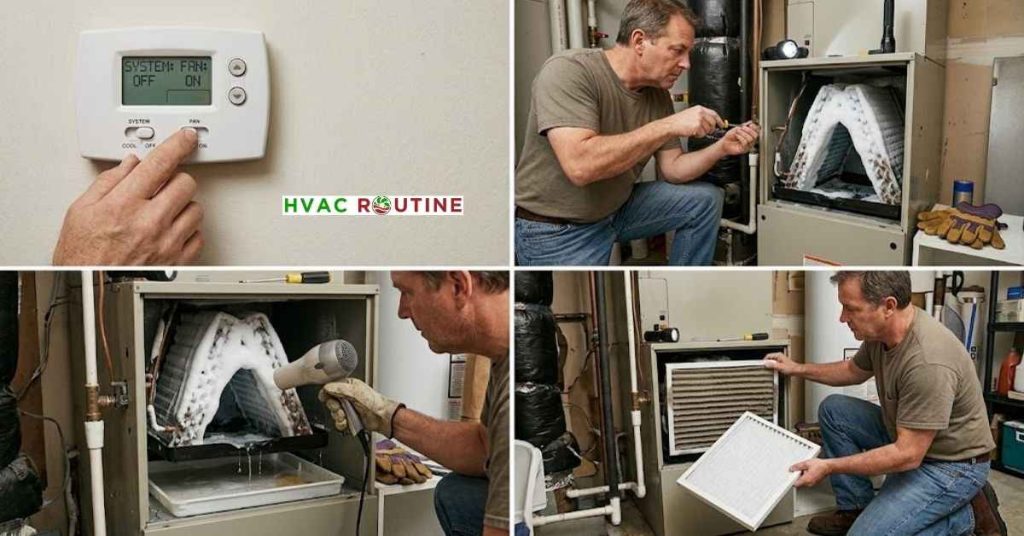
Step 1: Switch Cooling to OFF and Set the Blower Fan to ON
Flip your thermostat switch from COOL to OFF right away.
Next, change your fan switch from AUTO to ON.
Keeping the blower fan on to defrost AC systems utilizes your home’s 72-degree ambient air to melt the frost naturally.
The AUTO setting keeps the fan idle when the cooling cycle stops, while the ON setting runs the blower continuously without activating the outdoor compressor.
Step 2: Set Up Water Containment and Clear the Drain Line
A heavily iced coil holds two to four gallons of frozen moisture.
Place thick towels and a shallow basin directly under the indoor unit.
Inspect the primary condensate drain pipe to ensure melting runoff flows outdoors freely.
Connect a wet-dry vacuum to the outdoor drain line termination point to clear out algae sludge and prevent an air conditioner condensate drain overflow.
Step 3: Replace the Air Filter to Eliminate Airflow Restrictions
Pull out your existing air filter and hold it up to a light source.
If light cannot pass through the filter media, you found the main trigger behind the freeze.
A dirty HVAC filter airflow restriction starves the cold refrigerant lines of heat, dropping internal temperatures below 32 degrees Fahrenheit.
Install a clean filter with a rating between MERV 8 and MERV 11 to balance dust capture with proper airflow.
Step 4: Allow the Ice to Melt Completely
Give the unit adequate time to thaw all hidden internal passages.
A thin layer of frost melts in about two hours, while a solid block of ice requires six to eight hours.
Position a portable floor fan a few feet in front of the open access cabinet to speed up the process safely.
Do not rush this stage, because hidden ice deep between the coil slabs will immediately freeze up the system again.
Step 5: Test the System and Check Operating Temperatures
Ensure the drain pan and coil surface dried completely before you restore cooling.
Switch the thermostat back to COOL and return the fan setting to AUTO.
Let the air conditioner run for 30 minutes.
Place a thermometer at the supply vent closest to the air handler to verify crisp, cold air output between 15 and 20 degrees cooler than your room temperature.
What Determines Your AC Frozen Coil Thaw Time?
Several real-world conditions influence how quickly your system sheds its ice jacket.
| Ice Severity Level | Average Thaw Time | Best Practice |
| Light Surface Frost | 1 to 2 Hours | Keep blower fan ON with cabinet door closed |
| Moderate Ice Build (1/4 to 1/2 inch) | 3 to 5 Hours | Run blower fan ON and place towels around pan |
| Solid Ice Block (1+ inch encasement) | 6 to 10 Hours | Open cabinet, run auxiliary room fan, monitor drain |
Ambient indoor temperature plays a massive role in this timeline. A warm 78-degree hallway thaws ice twice as fast as a cool 65-degree basement.
Air movement across the metal surface transfers heat much faster than stagnant air.
Applying these frozen evaporator coil defrosting steps with an auxiliary room fan cuts the required waiting time in half.
Why Did My AC Freeze Up? Root Causes Behind the Frost
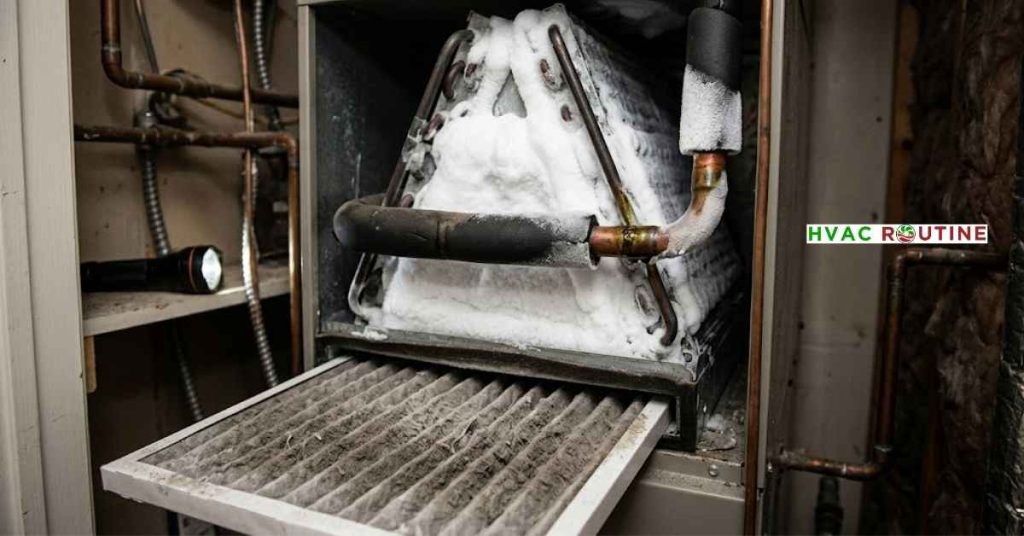
Low Refrigerant Frozen Coil Symptoms
When refrigerant leaks from a pinhole joint, the overall system pressure drops. Basic thermodynamics dictate that lower pressure lowers the boiling point of the coolant.
The refrigerant enters the evaporator well below freezing temperatures and turns moisture in the air into solid frost.
Common low refrigerant frozen coil symptoms include bubbling sounds, ice traveling along the insulated copper suction line outside, and lukewarm air from supply registers.
The U.S. Environmental Protection Agency mandates that only certified technicians handle and recharge refrigerant leaks.
Thermostatic Expansion Valve Freeze Up Issues
The thermostatic expansion valve regulates how much refrigerant enters the indoor coil. If this valve sticks closed or gets clogged with debris, it severely restricts refrigerant flow.
A thermostatic expansion valve freeze up starves parts of the coil while super-cooling the inlet tubes. This mechanical fault creates localized ice bands that quickly spread across the entire coil face.
Dust and Mold Buildup Blocking Heat Transfer
Over time, fine dust particles bypass low-quality filters and coat the aluminum fins. This layer acts like a thick winter blanket, preventing room heat from reaching the cold metal.
Technicians recommend safe coil cleaning methods using a self-rinsing alkaline foam spray once a year.
Gently apply the foam, let it lift the grime, and allow normal summer condensation to wash it down the drain line.
High Static Pressure from Closed Vents and Crushed Ducts
Closing registers in unused spare bedrooms creates a severe airflow bottleneck. Your blower needs a steady volume of return air to maintain balanced operating temperatures.
Keep at least 80 percent of all supply grilles wide open throughout your living space.
Inspect flexible ductwork in your attic to make sure heavy storage boxes have not crushed or kinked the airflow runs.
The Hidden Danger: Liquid Slugging Compressor Damage
Many homeowners make the mistake of leaving the thermostat on cooling while the coil stays frozen.
This simple error often destroys the entire HVAC system.
An evaporator coil must absorb heat to boil liquid refrigerant into a superheated gas before it leaves the air handler.
When a sheet of ice blocks that heat exchange, liquid refrigerant travels straight down the suction line into the outdoor unit.
Compressors can only compress gas; they cannot compress liquid.
This destructive event, known as liquid slugging compressor damage, shatters internal valves, snaps connecting rods, and burns out the motor.
Replacing a ruined compressor often costs upwards of $2,000, which makes stopping the system immediately your smartest move.
Practical Troubleshooting Example: Sarah’s Attic Air Handler
Consider a common scenario from a two-story home in Atlanta during July. Sarah noticed her upstairs temperature climbed to 79 degrees despite setting the thermostat to 72 degrees.
She checked the attic air handler and discovered a solid shell of ice coating the evaporator casing.
She immediately applied the proven frozen evaporator coil defrosting steps by shutting off cooling and running the blower fan.
She emptied the full condensate drain pan twice and cleared a thick algae clog from the PVC drain line using her wet-dry shop vac.
After replacing a severely clogged 1-inch fiberglass filter, she waited six hours for the ice to melt completely.
When she restarted the system, the temperature dropped steadily back down to 72 degrees, saving her from a costly emergency service call.
Simple Preventative Maintenance for Year-Round Comfort
Consistent seasonal care stops ice from forming in the first place.
Inspect your air filter on the first day of every month and replace it whenever dust covers the pleats.
Pour one cup of distilled white vinegar down the condensate drain access port every spring to dissolve algae and slime.
Keep furniture, drapes, and storage boxes at least two feet away from all return air grilles.
Schedule an annual professional tune-up with an HVAC technician to check refrigerant pressures, test electrical capacitors, and measure total airflow volume.
Taking these simple protective steps protects your equipment, lowers monthly electric bills, and guarantees reliable cooling all summer long.
Common Troubleshooting Questions and Expert Answers
Turning on your furnace or heating mode to defrost an air conditioner overnight creates serious water damage and safety risks.
A frozen evaporator coil holds two to four gallons of solid ice that melt rapidly under active heat.
This sudden volume of runoff water quickly overflows shallow drain pans and leaks through ceilings or subfloors while you sleep.
Intense heat from furnace burners also generates heavy steam inside the closed air plenum.
This trapped moisture can short out sensitive electrical control boards and trip internal furnace safety limit switches.
Leaving the system running overnight unattended prevents you from catching a blocked drain line before flooding occurs.
Switch your thermostat completely to OFF, change your fan setting to ON, and let ambient room air thaw the unit safely.
A light frost coating melts completely in about one to two hours when you run the blower fan.
A thick, solid block of ice encasing the entire coil assembly requires six to eight hours to melt fully.
Warmer indoor temperatures and continuous air circulation cut down the total thawing time significantly.
Never restart the cooling cycle while hidden ice pockets remain between the internal aluminum slabs.
Pouring hot water directly onto freezing metal causes rapid thermal expansion that cracks soldered copper joints.
The sudden rush of water quickly overwhelms shallow condensate pans and spills onto your ceiling drywall.
Hot water also bends delicate aluminum fins, which permanently restricts your system’s airflow channels.
Let the ice melt gradually with room-temperature air rather than forcing it with liquid heat.
A recurring freeze indicates an unaddressed root mechanical failure rather than a temporary airflow glitch.
If you replaced the air filter and ice returns within 24 hours, a refrigerant leak is likely dropping your system pressure.
A failing blower motor capacitor or a stuck thermostatic expansion valve will also trigger continuous freeze-ups.
Shut the cooling mode off immediately and contact a licensed technician to perform an electronic pressure diagnostic.
Running an iced-up air conditioner causes severe mechanical damage to your outdoor condenser unit.
Ice prevents the liquid refrigerant from absorbing indoor heat and boiling into a safe gaseous vapor.
The cold liquid flows straight back into the compressor pump, causing catastrophic liquid slugging.
This destroys internal pistons, snaps valves, and requires a complete compressor replacement costing thousands of dollars.

2 thoughts on “Frozen Evaporator Coil Defrosting Steps: Safe DIY Thaw and Fix Guide”