
Shopping for a new heating system can feel overwhelming when equipment spec sheets throw dozens of technical acronyms at you. Many homeowners buy a system based on peak laboratory numbers, only to open surprisingly high electric bills during freezing winter months.

Getting a scop rating heat pump explained clearly will save you hundreds of dollars on heating bills and help you choose the right equipment for your home.
This single seasonal rating reveals how much heat your system delivers over an entire winter compared to the electricity it consumes.
Let us examine how this rating works, how to compare international standards, and how to calculate your real savings.
What You'll Learn ⭐⭐⭐⭐⭐
- What Is Seasonal Coefficient of Performance?
- SCOP Rating Heat Pump Explained: How Standardized Testing Works
- COP vs SCOP vs SPF vs HSPF2: Comparing Efficiency Metrics
- HSPF2 to SCOP Conversion: Comparing American and European Metrics
- What Counts as a Good Air-to-Water Heat Pump Efficiency Rating?
- Real-World Factors That Impact Your Actual Heating Bills
- Calculating Energy Bill Savings with Real Numbers
- Common Questions About Heat Pump Performance
- Heat Pump Buyer Pre-Purchase Checklist
- Practical Steps to Maximize Your Heat Pump Performance
What Is Seasonal Coefficient of Performance?
The term SCOP stands for Seasonal Coefficient of Performance. It measures the overall heat pump seasonal efficiency across a full annual heating season rather than at a single mild outdoor temperature.
Traditional electric baseboard heaters run at an efficiency score of 1.0, which means they turn 1 kilowatt-hour (kWh) of electricity into exactly 1 kWh of heat.
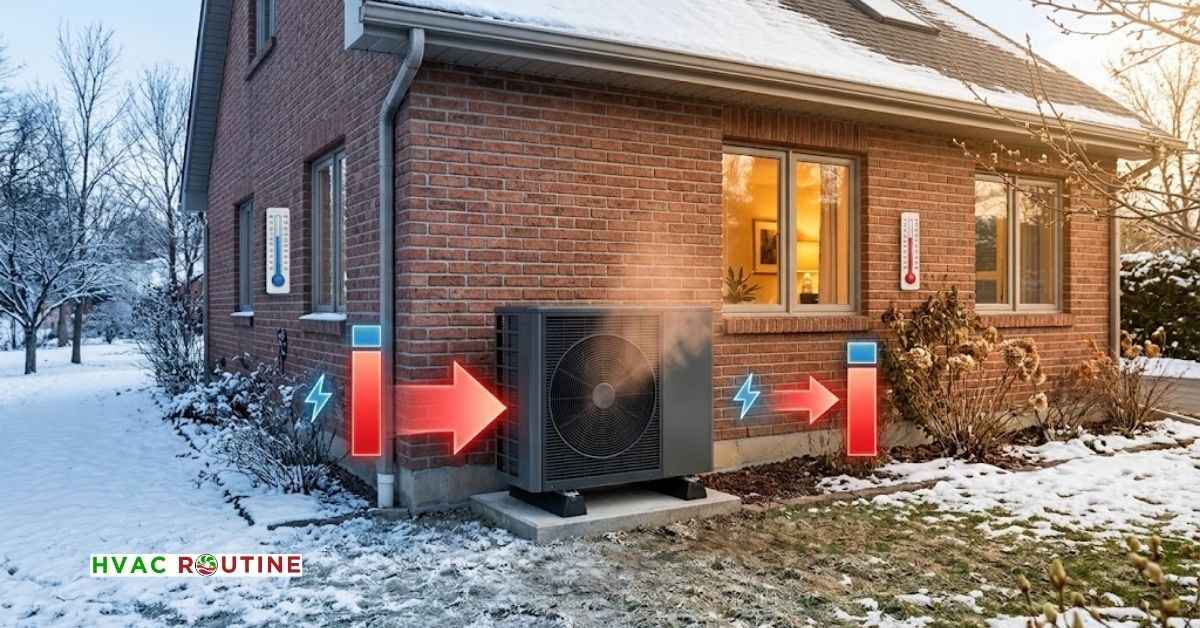
Heat pumps do not generate heat directly from fuel or electric elements; they move existing heat from outdoor air into your living space.
Because moving heat requires far less energy than creating it, heat pumps deliver a massive efficiency jump.
An SCOP of 4.0 means the heat pump delivers 4 kWh of heat for every 1 kWh of electricity it draws from the grid.
Higher numbers mean lower monthly operating costs and lower power consumption.
SCOP Rating Heat Pump Explained: How Standardized Testing Works
Standard laboratory testing protocols like the European EN 14825 standard determine official SCOP ratings.
Engineers do not simply test equipment on a pleasant 45°F (7°C) autumn afternoon and publish that single number.
They place the unit inside a climate chamber and measure thermal output across four distinct temperature points: 10°F (-7°C), 35°F (2°C), 45°F (7°C), and 54°F (12°C).
The testing software then applies weighted operating hours based on historical climate data to simulate a full winter season.
The calculation accounts for hidden energy draws that many buyers overlook.
These parasitic loads include crankcase heaters that keep compressor oil warm, standby power when the thermostat sits idle, and energy consumed during active defrost cycles.
When you see the scop rating heat pump explained on an official specification sheet, remember that independent test labs calculate this number by dividing total seasonal heat delivered by total electricity consumed across all operational modes.
COP vs SCOP vs SPF vs HSPF2: Comparing Efficiency Metrics
Equipment brochures often mix different rating terms, which makes direct comparison difficult for buyers.
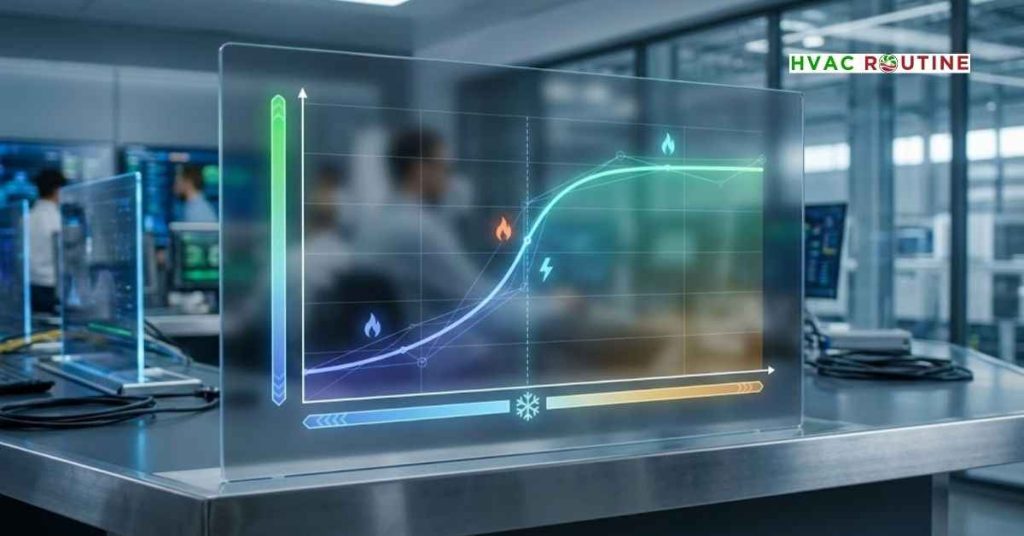
This comparison table clarifies how each rating standard measures heating performance:
| Metric | Region / Standard | How It Measures Efficiency | Best Used For |
| COP | Global (EN 14511) | Single snapshot at one outdoor temperature | Quick laboratory checks |
| SCOP | International / EU (EN 14825) | Seasonal average across 4 temperature bins | Estimating winter heating costs |
| HSPF2 | North America (AHRI 210/240) | Seasonal heating output in BTU per Watt-hour | Comparing US mini-split models |
| SPF | Global Field Metric | Real-world in-home metered annual performance | Verifying actual home energy bills |
Real-world SPF measurements from field research institutions, such as the Fraunhofer Institute for Solar Energy Systems, often run 10% to 15% lower than published laboratory SCOP figures.
Imperfect home insulation, high water temperature settings, and personal heating preferences explain this difference.
HSPF2 to SCOP Conversion: Comparing American and European Metrics
American manufacturers rate heating efficiency using HSPF2 (Heating Seasonal Performance Factor 2) under AHRI standards, while European and Asian brands publish SCOP values.
HSPF2 measures total seasonal heat output in British Thermal Units (BTU) divided by total electrical energy input in Watt-hours.
Because 1 Watt-hour equals 3.412 BTUs, you can convert between these systems using simple arithmetic.
To convert an American HSPF2 rating to an approximate SCOP rating, divide the HSPF2 value by 3.412.
For example, a standard heat pump with an HSPF2 rating of 10.2 delivers an estimated SCOP of 3.0.
A high-efficiency system with an HSPF2 of 13.0 achieves an estimated SCOP of 3.8.
This simple conversion allows you to compare imported equipment and domestic models on equal ground.
What Counts as a Good Air-to-Water Heat Pump Efficiency Rating?
Efficiency benchmarks vary depending on the type of system you install and how your home distributes heat.
- Standard Air-to-Air Mini-Splits: Quality ductless units average an SCOP between 3.8 and 4.6.
- Air-to-Water Hydronic Systems: Modern air-to-water heat pump efficiency ranges from 3.2 to 4.2 when paired with properly sized radiators or underfloor heating loops.
- Ground-Source (Geothermal) Systems: Because underground soil temperatures stay stable year-round, geothermal systems consistently reach elite ratings between 4.5 and 5.5.
- Cold Climate Heat Pumps: Modern units built for northern winters feature vapor-injection scroll compressors. These systems maintain a strong cold climate heat pump efficiency rating above 2.5 even when outdoor temperatures plunge to -15°F (-26°C).
Quick Rule of Thumb for Equipment Selection:
- SCOP under 3.2: High operational costs; suitable mainly for mild southern climates or well-insulated small spaces.
- SCOP 3.5 – 4.2: Standard modern efficiency for most residential retrofits and new builds.
- SCOP 4.5+: Elite efficiency tier; lowers winter electricity consumption by up to 40% when paired with low-temperature emitters.
Having the scop rating heat pump explained before you sign an installation contract protects you from buying an undersized unit that relies on expensive auxiliary resistance strips during deep winter freezes.
Real-World Factors That Impact Your Actual Heating Bills
A high rating on a factory sticker does not guarantee low electric bills if your system operates under poor mechanical conditions.
The temperature of the water circulating through your heating pipes makes the largest impact on operating efficiency.
Thermodynamics dictates that lifting heat to a higher output temperature requires more mechanical work from the compressor.
Every 2°F (1°C) increase in your water supply temperature lowers your operating efficiency by roughly 2%.
Running an air-to-water system into Hydronic Underfloor Heating Guide at 95°F (35°C) yields an outstanding SCOP near 4.2.
Forcing that same heat pump to feed undersized baseboard radiators at 131°F (55°C) drags your seasonal rating down toward 3.0.
Properly matching the heat emitter surface area to your home heating load lets the heat pump run at lower water temperatures and saves significant power.
Calculating Energy Bill Savings with Real Numbers
Let us examine a practical example to see how different efficiency tiers affect your household budget.
Consider a 2,000-square-foot home with an annual heating demand of 15,000 kWh of thermal energy.
Assume the local electric utility charges $0.20 per kWh.
- Baseboard Electric Heating (SCOP 1.0):
Uses 15,000 kWh of electricity.
Annual heating cost = $3,000.00 - Budget Heat Pump (SCOP 3.2):
15,000 kWh ÷ 3.2 = 4,687.5 kWh of electricity consumed.
4,687.5 kWh × $0.20 = $937.50 per year - Premium Heat Pump (SCOP 4.5):
15,000 kWh ÷ 4.5 = 3,333.3 kWh of electricity consumed.
3,333.3 kWh × $0.20 = $666.66 per year
Upgrading from an entry-level unit (3.2) to a high-performance system (4.5) saves you $270.84 each winter.
Over a 15-year equipment lifespan, that performance gap adds up to more than $4,000 in direct cash savings.
Common Questions About Heat Pump Performance
Does Domestic Hot Water Lower Your Overall Efficiency?
Yes, producing domestic hot water requires higher temperatures than space heating.
Your heat pump must lift water tank temperatures to 130°F–140°F (55°C–60°C) to provide safe, comfortable household water.
The compressor works harder during hot water production, which lowers its instantaneous COP to around 2.2 to 2.8.
Space heating ratings on equipment labels exclude hot water production, so your overall yearly utility bill will reflect this added workload.
Do Defrost Cycles Waste a Lot of Energy?
Modern heat pumps reverse their refrigerant cycle for two to four minutes to melt frost off the outdoor coil.
While the unit consumes a small amount of electricity during this process, certified testing standards include these defrost penalties in the official rating.
A properly commissioned system loses less than 3% of its total seasonal energy output to defrost cycles.
Can Air-Source Units Handle Extreme Sub-Zero Freezes?
Modern Best Cold Climate Heat Pumps use variable-speed compressors and enhanced vapor injection to extract heat down to -20°F (-29°C).
While immediate efficiency drops during severe freezes, the seasonal calculation accounts for these cold snaps without ruining your annual average.
Heat Pump Buyer Pre-Purchase Checklist
Review these technical specifications with your HVAC contractor before signing an installation contract:
- Verify the stated SCOP at your home design flow temperature (35°C for underfloor loops vs. 55°C for radiators).
- Confirm the seasonal rating matches your local climate zone (Cold Zone vs. Average Zone).
- Require a formal Manual J Heat Loss Calculation to avoid inefficient equipment oversizing.
- Confirm that the outdoor unit includes automated weather compensation controls.
- Check compressor turndown ratios to ensure the system can modulate down during mild autumn days.
Practical Steps to Maximize Your Heat Pump Performance
Always demand a room-by-room heating load calculation before purchasing new equipment. Never allow an installer to select equipment size based solely on square footage estimates.
Set your system controller to use an outdoor weather compensation curve so the heat pump automatically lowers water temperatures during mild weather.
Clean outdoor air intake grilles regularly and keep snow buildup clear of the fan discharge.
Investing in larger radiator panels or radiant floor heating will unlock the highest possible efficiency from your new heat pump investment.

1 thought on “SCOP Rating Heat Pump Explained: Your Guide to Seasonal Efficiency and Lower Energy Bills”