
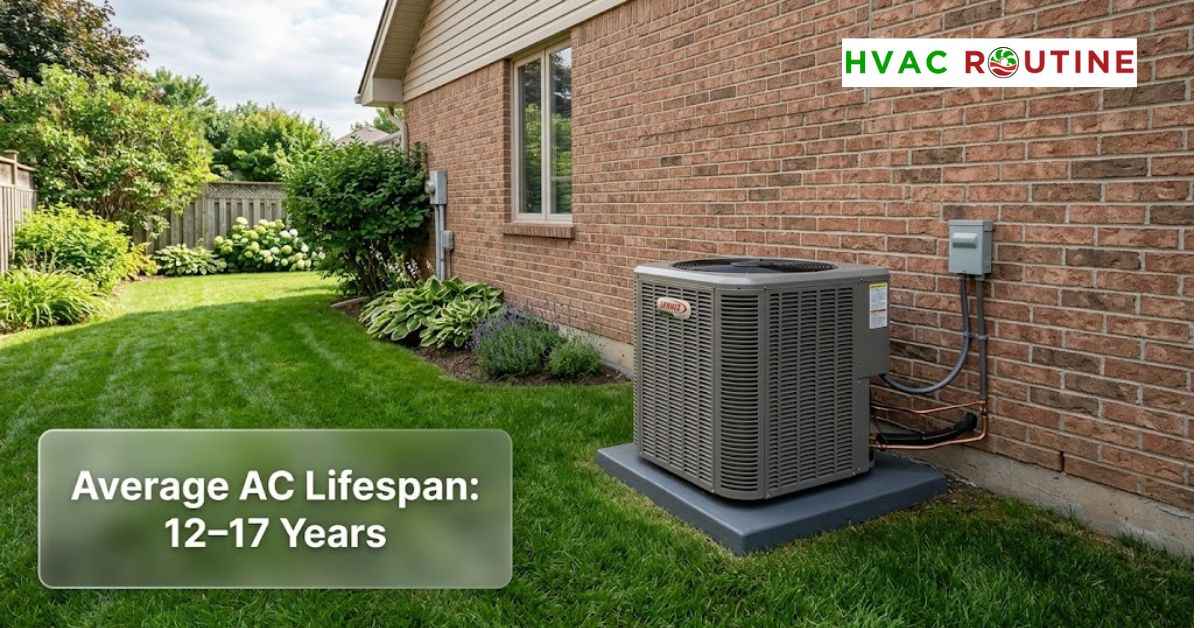
Every homeowner knows that sinking feeling in the pit of their stomach when the house starts warming up on a sweltering July afternoon. You head over to the thermostat, glance at the display, and hold your hand up to the nearest register, only to feel room-temperature air puffing against your skin. Panic sets in, followed closely by the worry that a pushy salesperson is about to talk you into an expensive replacement. Your immediate question is simple: how long do AC units last before you have no choice but to replace them?
On paper, standard central air conditioners give you between 12 and 17 years of reliable service. Heat pumps run slightly shorter, typically lasting 10 to 15 years because they work double-time through both scorching summers and freezing winters. Ductless mini-splits often push right past the 20-year mark when homeowners stay on top of regular seasonal maintenance. But real life rarely matches factory brochures. Let us pull back the curtain on how long these cooling setups actually hold up in real homes, how to tell when an aging unit is running on borrowed time, and how to protect your family budget from premature replacement calls.
What You'll Learn ⭐⭐⭐⭐⭐
- How Long Do AC Units Last?
- How to Find the Exact Age of Your AC Unit
- Signs Your Air Conditioner Is Dying
- Repair vs. Replace Cost Guide: Real HVAC Numbers
- Are You Still Covered by Parts or Labor Warranties?
- Do Specific AC Brands Last Longer Than Others?
- Why Nitrogen Purging Protects Your Compressor
- The Refrigerant Transition: Why R-410A Systems Face Rising Costs
- How Much Does a Brand-New Central AC Cost?
- Maintenance Habits That Add Five Years to Your AC
How Long Do AC Units Last?
System life comes down to three main realities: running hours, regional humidity, and how well the crew installed the equipment on day one. Think of your cooling system like a vehicle. An air conditioner running in the thick, humid air of coastal Texas racks up the mechanical equivalent of stop-and-go taxi miles in downtown Manhattan, while an identical unit in Wisconsin runs like a weekend cruiser. The U.S. Department of Energy points out that routine preventive checkups prevent early mechanical failure, but the equipment category itself sets the baseline.
- Central split systems (12 to 17 years): These workhorse setups split cooling duties between an outdoor condenser unit and an indoor evaporator coil sitting atop a furnace or air handler. Units in northern states often push past 18 years because they sit completely dormant for half the year. In hot southern states, constant runtime and heavy moisture loads often push these units into retirement by year 12.
- Air-source heat pumps (10 to 15 years): Heat pumps rely on a reversing valve to alternate between cooling your living space in July and warming it in January. Because that compressor pump runs almost all twelve months of the year, mechanical parts wear down much faster than a cooling-only unit.
- Ductless mini-split systems (15 to 20 years): Mini-splits use variable-speed inverter compressors that gradually ramp speed up and down. This design avoids the violent electrical shocks that occur when single-stage compressors slam on at full blast. Independent room zoning also reduces unnecessary runtime across the house.
- Window and portable units (7 to 10 years): These compact machines rely on factory-sealed capillary tubes and unserviceable hermetic motors. When a fan motor burns out or indoor coils choke with grease, the repair bill usually costs more than buying a brand-new box at the local hardware store.
How to Find the Exact Age of Your AC Unit
If you bought a previously owned house, the previous homeowners rarely left behind original equipment receipts or installation permits. Fortunately, you do not need to pay a technician just to find out how old your system is.
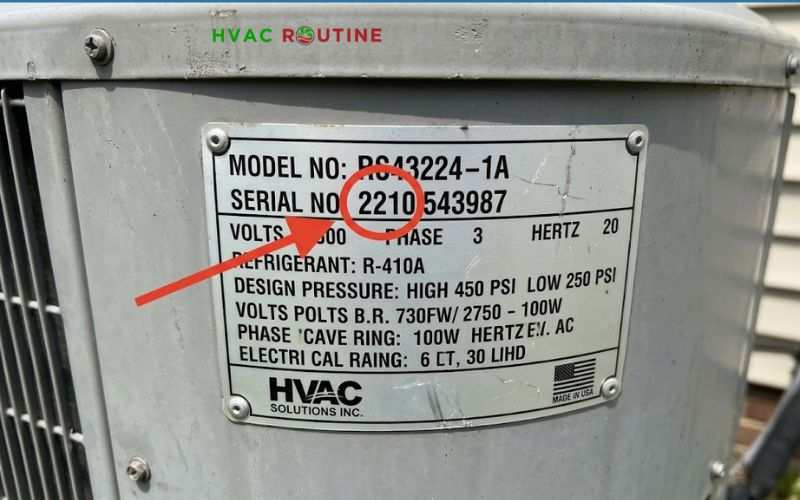
Walk outside to your outdoor condenser unit and look for the metal rating plate riveted to the exterior cabinet. Locate the serial number stamped right next to the electrical specifications and model number. Manufacturers stamp production dates directly into this sequence using basic brand codes:
- Carrier, Bryant, and Payne: These brands stamp the manufacturing date right into the first four digits of the serial sequence. The first two numbers reveal the week of production, and the next two show the year. A serial number starting with
2416tells you the factory assembled that unit in the 24th week of 2016. - Goodman and Amana: These units use a straightforward year-and-month format. The first two digits represent the year, while the second two show the month. A serial number starting with
1805rolled off the assembly line in May 2018. - Trane and American Standard: These nameplates often print an explicit date box right beside the serial line labeled “Date of Manufacture.” On older models, the first digit of the serial number corresponds to the year of production within that decade.
- Lennox: Look at the second and third characters. Lennox typically leads with a plant location code, followed immediately by two digits that represent the calendar year.
When numbers fade or rub away from weather exposure, enter your full model and serial number into free online HVAC equipment decoders to confirm the exact build date.
Signs Your Air Conditioner Is Dying
Cooling equipment rarely quits without dropping hints weeks or months beforehand. Catching these early mechanical symptoms lets you plan repairs on your own schedule instead of scrambling for emergency financing during a 95-degree heatwave.
- Lukewarm supply air: A healthy cooling system creates a 16-to-20-degree drop between the warm air entering the return grilles and the chilled air blowing out of supply vents. Technicians call this temperature spread the Delta T split. If your vents blow room-temperature air on an 85-degree afternoon, your equipment has lost its ability to move heat outdoors.
- Unexplained power bill spikes: Compare your recent kilowatt-hour usage against your utility statements from the exact same month last year. As internal compressor valves degrade and motor capacitors weaken, the system runs longer cycles to hit your target indoor temperature, running up your electric bill.
- Grinding noises and acrid smells: Normal systems produce a gentle whoosh of rushing air through ductwork. Squealing sounds point to worn-out brass motor bearings, while loud metal clanking usually signals a loose connecting rod or damaged fan blade. Acrid, burning odors mean electrical wire insulation is melting inside the blower cabinet.
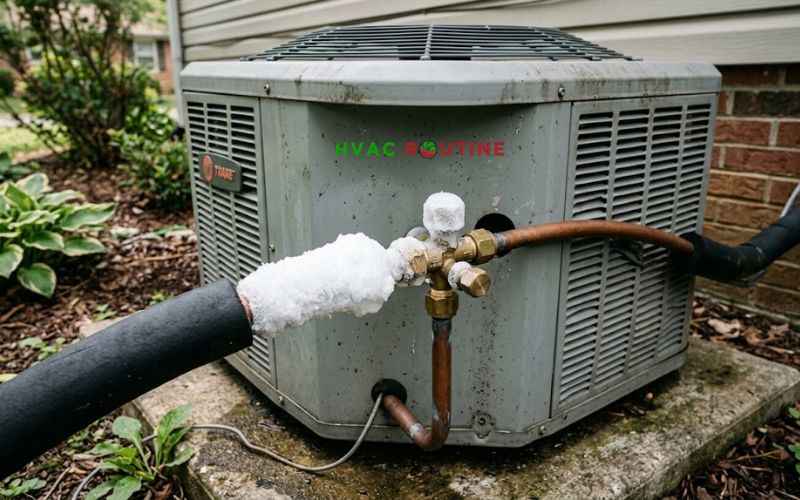
- Ice crawling along copper lines: Finding frost or solid ice on your outdoor brass service valves signals a serious pressure problem. Dirty air filters or slow refrigerant leaks cause coil temperatures to plummet below freezing. Condensation instantly turns to ice, choking airflow completely and risking liquid refrigerant floodback that cracks compressor valves.
Repair vs. Replace Cost Guide: Real HVAC Numbers
Homeowners often feel trapped when a technician hands them an expensive quote on an aging system. Aggressive sales reps love telling homeowners that an 8-year-old system is “dead” just to sell an $11,000 replacement. Half the time, the machine just needs a thirty-dollar run capacitor or a simple contactor swap.
Before you let anyone push you into panic-buying a brand-new unit, run the numbers against standard industry repair averages:
| Repair Type / Component | Average Repair Cost (USD) | Smart Decision Guideline |
| Dual-Run Capacitor or Contactor | $150 – $350 | Fix this issue on any system regardless of age |
| Blower Motor or Condenser Fan | $450 – $900 | Fix the unit if equipment is under 10 years old |
| Evaporator Coil Replacement | $1,200 – $2,200 | Replace the entire system if unit exceeds 8 years |
| Compressor Burnout or Locked Rotor | $1,500 – $2,800 | Replace the entire system if unit exceeds 8 years |
| Brand-New Complete Central System | $6,500 – $12,000+ | Best long-term move for failing units over 10 years |
The $5,000 Rule
When you face a major mechanical quote, use the classic industry formula known as the $5,000 rule. Take the exact age of your cooling system in years and multiply it by the contractor’s repair quote in dollars. If that total figure breaks past $5,000, put your money toward a modern replacement system. If the total stays under $5,000, make the repair and keep your unit running.
Consider a 7-year-old system that needs an outdoor fan motor replacement priced at $450. Multiply 7 years by $450 to get $3,150. Because $3,150 sits comfortably below the $5,000 line, approving that repair makes total sense; the machine still has years of life left in it.
Now look at an 11-year-old system that developed a leaking evaporator coil with a quote of $1,900 for coil replacement and fresh refrigerant. Multiply 11 years by $1,900 to get $20,900. That figure blows right past the threshold. Sinking two thousand dollars into an 11-year-old unit with a worn compressor and thinning copper lines is throwing good money down a dark hole.
Are You Still Covered by Parts or Labor Warranties?
Always verify your active warranty paperwork before approving major component replacements. Major brands advertise a standard 10-year limited parts warranty on compressors and heat exchangers, but manufacturers bury fine print that trips up thousands of homeowners every year.
Most brands require the installing contractor or original buyer to register the equipment online within 60 to 90 days of installation. If nobody registered that equipment, your factory warranty automatically drops to 5 years. Furthermore, factory warranties almost never transfer automatically when a house sells unless the new buyer submits an official transfer request and pays an administrative fee within 30 days of closing.
Factory warranties also cover only the replacement metal part itself, never the labor. The installing HVAC company generally provides a 1-year labor warranty for workmanship. Once that first year expires, you must pay full hourly rates for the technician’s time, recovery machine usage, and diagnostic fees.
Do Specific AC Brands Last Longer Than Others?
Homeowners regularly debate whether Carrier, Trane, Lennox, or Goodman builds the longest-lasting cooling system. The plain truth is that brand names influence equipment life far less than people think.
Nearly every major air conditioning brand sources internal components from the very same component manufacturers. Open up the access panels across different brand names, and you will find Copeland scroll compressors, Genteq blower motors, and Packard capacitors humming inside almost all of them. Professional installation and accurate airflow sizing dictate roughly 80% of how long do AC units last in real homes. A budget unit installed with flawless craftsmanship will outlast a premium brand installed carelessly every single time.
Why Nitrogen Purging Protects Your Compressor
Ask any contractor bidding on your home how they handle pipe brazing. When a technician solders copper lines together with a high-heat oxyacetylene torch, the extreme heat reacts with atmospheric oxygen inside the pipe, creating black, flaky copper oxide scale.
Careless installers skip flowing dry nitrogen through the copper lines while they braze. Those abrasive carbon flakes peel loose the second liquid refrigerant rushes through the system. The grit washes directly into the compressor crankcase and plugs the tiny opening in your thermostatic expansion valve. That single lazy shortcut burns out a brand-new compressor within three to five years. Always hire a team that explicitly flows dry nitrogen during every brazing job.
The Refrigerant Transition: Why R-410A Systems Face Rising Costs
Environmental regulations now require cooling manufacturers to shift toward lower global warming potential refrigerants. Modern residential systems use mildly flammable A2L refrigerants, specifically R-454B and R-32.
Because chemical companies are actively scaling back the production and import of older R-410A refrigerant, virgin supplies will shrink, driving per-pound chemical refill costs sharply higher. If your 12-year-old system develops a refrigerant leak inside the evaporator coil, paying top dollar for scarce R-410A gas makes very little financial sense. You are paying high prices for gas that will simply leak back out into the atmosphere. Upgrading to modern equipment keeps you from pouring cash into an obsolete chemical supply chain.
How Much Does a Brand-New Central AC Cost?
When fixing an old system stops making sense, you need real numbers to set your replacement budget. Today, installing a complete central cooling system in an average single-family home runs between $6,500 and $12,000 or more.
A standard 14.3 SEER2 single-stage unit sits at the lower end of that price spectrum. Premium variable-speed inverter systems equipped with communicating thermostats sit at the top. This price tag includes taking out the old unit, installing the new condenser and coil, pulling proper electrical disconnects, pulling a deep vacuum, and pulling municipal permits. You can offset those upfront costs by checking for local utility rebates and claiming federal clean energy tax credits on qualifying high-efficiency equipment.
Maintenance Habits That Add Five Years to Your AC
You do not need specialized trade training to keep your equipment running smoothly. Simple homeowner routines keep internal operating temperatures low and stop minor friction from wrecking major motors.
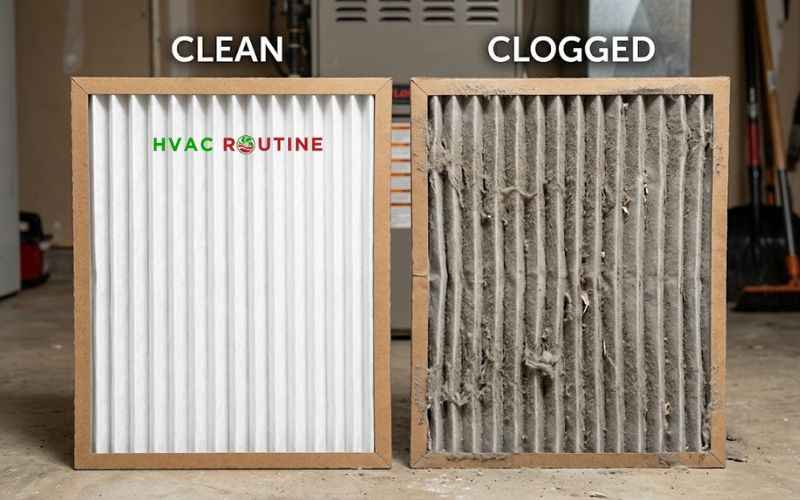
- Change air filters on a strict schedule: Pulling a gray, furry air filter out of an indoor return is the most common sight on residential service calls. A choked filter forces your blower motor to pull air like a runner breathing through a coffee stirrer. The motor runs hot, air pressure drops across the indoor coil, and liquid refrigerant floods right back into the compressor pump. Check standard 1-inch pleated filters every 30 days during heavy cooling months, and inspect thicker 4-inch media filters every 6 months.
- Clear the outdoor breathing room: Keep a 24-inch clear radius around the perimeter of your outdoor unit. Prune back low tree branches, pull creeping vines, and trim boxwood shrubs so your condenser fan can exhaust heat without pulling hot air right back down through the top grille.
- Rinse your condenser coils each spring: Head outside, pull the electrical disconnect handle on the exterior wall to kill power, and grab your garden hose. Wash away dirt, tree sap, and grass clippings caught between the thin aluminum fins by spraying the coil from the top down. Never use a high-pressure power washer, as intense water pressure crushes delicate aluminum fins instantly.
- Clear your condensate drain with vinegar: Pour one cup of plain distilled white vinegar into your indoor condensate drain line every 60 days. The mild acid eats through algae and slime buildup, preventing standing water backups that trigger emergency float switches and shut down your system.
- Book a preseason professional tune-up: Hire a qualified HVAC technician once a year to measure capacitor microfarads, clean electrical contactor contacts, and check operating pressures. Finding a drifting $30 capacitor during an April checkup saves you from dealing with a locked compressor motor in the middle of an August heatwave.
Keeping a home comfortable does not mean living in fear of unexpected equipment breakdowns. When you know how long do AC units last, you can track your system’s age through its serial number, watch for clear warning signs, and run the $5,000 rule to make smart, level-headed financial choices. Keep clean filters in your return vents, wash your outdoor coils every spring, and you will easily squeeze years of reliable comfort out of your cooling investment.

1 thought on “How Long Do AC Units Last? Realistic Lifespans, Serial Secrets, and Costly Mistakes”