
Replacing your home cooling system feels overwhelming, especially when you start looking at the steep price tags. You probably want to know right away exactly how much does a new AC unit cost in today’s market. The short answer falls anywhere between $5,000 and $15,000 for a standard central air setup, while high-end smart heat pumps can easily push that total past the $20,000 mark.
Buying an air conditioner today looks completely different than it did just five years ago. Modern systems come packed with strict energy efficiency rules, smart home automation controls, and updated low-GWP refrigerants that influence your total price. I will break down every single cost factor so you can make a smart, informed decision that protects your home and your wallet.
What You'll Learn ⭐⭐⭐⭐⭐
- Quick Summary: 2026 AC Unit Cost at a Glance
- Before You Buy: Diagnose Your Current System
- Cost Comparison by Cooling System Type
- How Much Does a New AC Unit Cost by Home Square Footage?
- See How Location and Climate Change Your Price
- Compare AC Unit Costs by Top Brands
- Premium Brands Versus Budget Friendly Brands
- Understand Labor Costs and Installation Timelines
- Insider Tips: Negotiating With Contractors
- The Best Time of Year to Buy
- Avoid The Severe Risks of Hiring Cheap Contractors
- The Danger of Refrigerant Leaks and Moisture
- Miscalculations and Short-Cycling Issues
- Field Notes: Electrical Panels and Ductwork Requirements
- The Reality of Circuit Breakers and Wire Gauges
- Inspect and Upgrade Old Ductwork
- Smart Technology and Efficiency Standards That Change Your Cost
- Decode SEER2 Ratings and Energy Efficiency
- Understand the R-454B and R-32 Refrigerant Transition
- Maximize Savings With Federal Tax Credits and Utility Rebates
- Top Buyer Questions Answered
- Should I Repair My Old AC or Buy a New One?
- How Long Does a Modern Smart AC Unit Last?
- What Is the Difference Between Equipment and Labor Warranties?
- Final Thoughts on Your AC Investment
- About the Author & Technical Review
Quick Summary: 2026 AC Unit Cost at a Glance
- National Average Cost: $8,460 fully installed.
- Typical Price Range: $5,000 to $15,000 across all system sizes.
- Window and Portable Units: $150 to $800 for single-room spot cooling.
- Ductless Mini-Splits: $3,500 to $14,000 depending on the number of indoor air handlers.
- Smart Inverter Heat Pumps: $10,500 to $20,000+ for whole-home heating and cooling.
- Labor Share of Total Cost: 50% to 60% of your total contractor invoice.
Before You Buy: Diagnose Your Current System
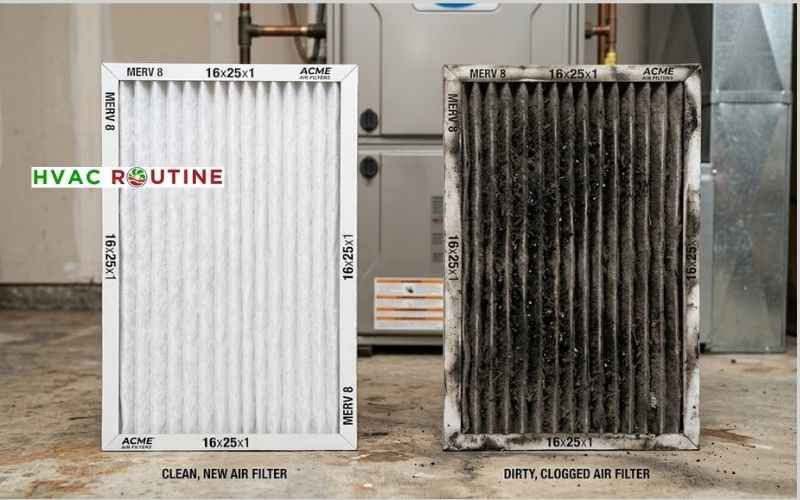
Before you drop thousands of dollars on a brand-new system, check your current equipment. You might just need a simple fix instead of a total replacement. We often see homeowners assume their compressor is dead when the real issue is just a blown capacitor or a heavily clogged air filter.
Tools Required: Digital multimeter, insulated screwdriver, safety goggles, heavy-duty work gloves, coil cleaning brush, and replacement air filters.
Safety Warnings: Always shut off the main breaker switch to your system before you open any access panels. Never attempt to handle or refill refrigerant lines yourself. Highly pressurized chemicals pose severe physical risks and require Environmental Protection Agency (EPA) certification to handle legally.
Step-by-Step Fixes:
- Inspect and replace dirty indoor air filters that block airflow and cause your indoor coil to freeze over.
- Reboot your smart thermostat and make sure the low-voltage wiring connections sit tightly in their terminals.
- Clear leaves, branches, and trash away from your outdoor condenser unit so it can release heat properly into the outdoor air.
- Check your main electrical panel for tripped breakers and firmly reset them one time.
When to Call a Pro: Contact a licensed technician right away if your compressor makes loud, metal-on-metal grinding noises. Call an expert if you see thick ice covering your copper refrigerant lines or if the system keeps tripping your breaker repeatedly.
Cost Comparison by Cooling System Type
The type of system you choose determines your baseline price before a contractor even adds their labor fees.
| AC System Type | Equipment Only Price | Average Installed Cost | Best Suited For |
| Window AC Unit | $150 – $600 | $150 – $750 | Single rooms, rentals, supplemental cooling |
| Portable AC Unit | $250 – $700 | $250 – $750 | Small spaces without window access |
| Ductless Mini-Split (1-4 Zones) | $1,500 – $6,500 | $3,500 – $14,000 | Homes without ductwork, home additions |
| Standard Central AC | $2,200 – $6,000 | $5,000 – $15,000 | Homes with existing ductwork |
| Dual-Fuel Smart Heat Pump | $4,500 – $11,000 | $10,500 – $20,000+ | All-electric whole-home heating and cooling |
How Much Does a New AC Unit Cost by Home Square Footage?
System size directly drives equipment pricing and installation complexity. Contractors calculate system capacity in “tons,” where one ton equals 12,000 BTUs of cooling power per hour.
| Home Size (Square Feet) | Required System Size (Tons) | Standard Efficiency (14-15 SEER2) | High-Efficiency (16-18+ SEER2) |
| 1,000 – 1,400 sq ft | 2.0 Tons | $5,000 – $6,500 | $6,800 – $8,500 |
| 1,500 – 1,900 sq ft | 2.5 – 3.0 Tons | $6,000 – $7,500 | $7,800 – $10,000 |
| 2,000 – 2,400 sq ft | 3.5 – 4.0 Tons | $7,200 – $8,800 | $9,000 – $12,500 |
| 2,500 – 3,200 sq ft | 4.0 – 5.0 Tons | $8,500 – $10,500 | $11,000 – $15,000 |
| 3,300+ sq ft | Dual Systems / 5+ Tons | $12,000 – $18,000 | $16,000 – $24,000+ |
See How Location and Climate Change Your Price
Your local climate plays a massive role in your final invoice. Homeowners in extremely hot states like Texas, Arizona, or Florida push their cooling equipment around the clock. These regions demand high-capacity 4-ton or 5-ton systems with top-tier efficiency ratings to withstand heavy summer heat waves. Because of this, a buyer in Dallas will easily pay $2,500 to $4,000 more than a homeowner cooling a smaller house in a mild northern state like Wisconsin.
Compare AC Unit Costs by Top Brands
Brand names carry distinct price points based on build quality, sound dampening jackets, and proprietary compressor designs.
| HVAC Brand | Price Tier | Average Installed Cost (3-Ton Unit) | Key Advantage |
| Goodman / Amana | Budget | $5,200 – $7,200 | Affordable off-the-shelf parts, easy repairs |
| Rheem / Ruud | Mid-Range | $6,000 – $8,500 | Compact cabinet designs, reliable performance |
| York / Coleman | Mid-Range | $6,200 – $8,800 | Quiet swept-wing fan blades, balanced pricing |
| Carrier / Bryant | Premium | $7,800 – $12,500 | Advanced variable-speed sound control, high efficiency |
| Trane / American Standard | Premium | $8,200 – $13,000 | Heavy-duty Spine Fin coils, extreme durability |
| Lennox | Ultra-Premium | $8,500 – $14,500 | Highest available SEER2 efficiency ratings |
Premium Brands Versus Budget Friendly Brands
Premium brands like Trane and Carrier charge higher prices because they build custom sound-dampening compressor jackets and patented coil designs. On the other hand, budget-friendly brands like Goodman cost significantly less upfront because they use standard, universal parts. While this makes Goodman units slightly louder during operation, they remain incredibly affordable to fix over the next decade because technicians can easily source replacement parts from any local supply house.
Understand Labor Costs and Installation Timelines
Many buyers experience serious sticker shock because they only think about the metal box sitting outside. In reality, you pay heavily for specialized technical trade work on installation day.
The physical air conditioner, evaporator coil, and line set account for about 40% to 50% of your total invoice. The remaining 50% to 60% covers skilled labor, vacuum testing, recovery equipment, state permits, and old equipment removal fees. A standard direct changeout—where a crew simply swaps your old condenser and indoor coil—takes four to eight hours. However, if your project requires duct modifications, new condensate drain lines, or fresh electrical line drops, expect the crew to spend two to three full days at your house.
Insider Tips: Negotiating With Contractors
Do not fall for high-pressure sales tactics when getting estimates. If a salesperson offers a “same-day discount” but pressures you to sign a contract on the spot, politely show them the door.
Always insist on an itemized written bid that clearly separates equipment prices, permit fees, and labor costs rather than accepting a single lump-sum number. When a contractor gives you a recommendation, test their knowledge by asking: “Can you show me the Manual J load calculation sheet for this tonnage?” If they sized your system just by looking at your home’s square footage instead of running the proper math, find another company immediately.
The Best Time of Year to Buy
Timing your purchase saves you hundreds of dollars on equipment and labor. HVAC contractors face their absolute highest demand during the scorching summer months when older units constantly fail. They charge top dollar during these summer emergencies and work on tight, rushed schedules. Try to schedule your replacement during the spring or fall shoulder seasons. Contractors readily offer aggressive labor discounts and manufacturer clearance pricing during these off-peak months simply to keep their installation crews busy.
Avoid The Severe Risks of Hiring Cheap Contractors
Cutting corners on installation day destroys your brand-new equipment. If you hire the cheapest guy on the block, you will likely pay double to fix their mistakes next year.
The Danger of Refrigerant Leaks and Moisture
Inexperienced installers frequently skip pulling a deep vacuum on the copper lines with a dedicated micron gauge. Skipping this vital step traps air and moisture inside the closed refrigeration loop. That trapped moisture combines with compressor oil and modern refrigerants to form a dangerous hydrofluoric acid. This acid silently strips the protective enamel coating off your compressor motor windings, destroying a $3,000 part from the inside out.
Miscalculations and Short-Cycling Issues
Bigger is not always better in the HVAC world. When a cheap contractor slaps an oversized 5-ton system into a home that only needs 3 tons, the house cools down in ten minutes flat. The unit shuts off before the cold evaporator coils can pull moisture from the air. This rapid short-cycling leaves you shivering in a sticky, humid room that feels like a cold, damp basement while your electric meter spins wildly out of control.
Field Notes: Electrical Panels and Ductwork Requirements
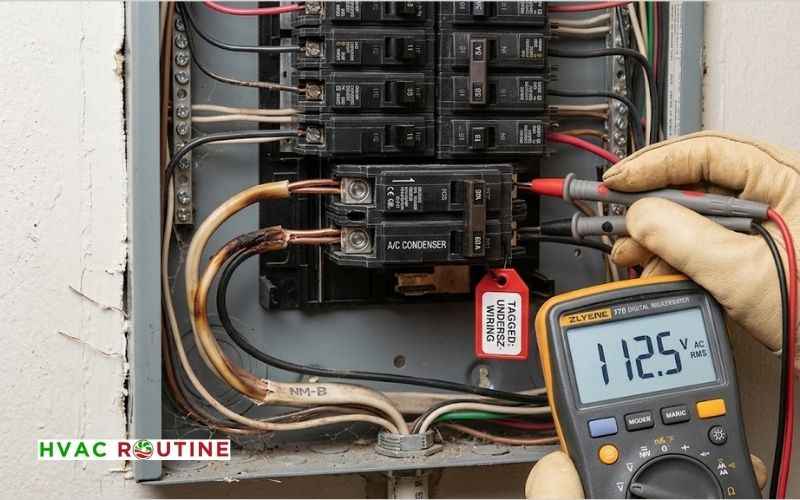
Modern high-efficiency cooling requires a rock-solid electrical and airflow foundation to run safely.
The Reality of Circuit Breakers and Wire Gauges
I cannot tell you how many times I have opened an electrical disconnect on an older home and found scorched 10-gauge wire hooked to a massive new 5-ton unit. That shortcut saves a lazy installer thirty minutes, but it puts your entire home at severe risk of an electrical fire. High-draw inverter compressors require dedicated dual-pole circuit breakers and heavy 8-gauge or 6-gauge copper wiring to prevent dangerous voltage drops. Upgrading an outdated fuse box or 100-amp panel to a modern 200-amp service panel to support these systems usually costs an extra $1,500 to $2,500.
Inspect and Upgrade Old Ductwork
High-tech variable-speed blowers need perfectly sealed, correctly sized return air ducts to maintain the right static pressure. Cracked or disconnected flex ducts hidden up in your attic dump expensive, cold conditioned air straight into the outdoors. Budget an extra $2,000 to $4,000 if your chosen installer notes that they need to seal, insulate, or resize your existing duct branches.
Smart Technology and Efficiency Standards That Change Your Cost
Advanced engineering definitely increases initial equipment prices, but it drastically cuts down your long-term operating costs.
Decode SEER2 Ratings and Energy Efficiency
The Department of Energy uses the SEER2 rating system to measure energy efficiency under highly realistic static pressure conditions. Base models start at 14.3 SEER2 in northern states and 15.2 SEER2 in southern regions. While upgrading to an 18+ SEER2 inverter system costs about $3,000 more upfront, it slashes your summer cooling power consumption by up to 35%. Instead of blasting on and off loudly, an inverter compressor quietly hums at a low speed, perfectly maintaining your temperature without waking you up in the middle of the night.
Understand the R-454B and R-32 Refrigerant Transition
The Environmental Protection Agency mandates a massive transition to low-GWP (Global Warming Potential) refrigerants like R-454B and R-32. These new, mildly flammable A2L refrigerants require manufacturers to install automatic leak detection sensors, spark-proof electrical relays, and fully redesigned evaporator coils. These mandatory safety designs add roughly $400 to $800 to equipment manufacturing costs in 2026.
Maximize Savings With Federal Tax Credits and Utility Rebates
Do not let the initial quotes scare you; incentives exist to help take the sting out of high upfront equipment costs.
You can claim federal tax credits under Section 25C for energy-saving home upgrades, getting back up to 30% of your project costs for qualified heat pumps (capped at $2,000 per year). Additionally, standard central air units that achieve high SEER2 tiers qualify for a separate $600 federal tax credit. Combine this with local electric utility companies that frequently hand out instant cash rebates between $250 and $1,500 when you install an energy-saving cooling system. Ask your contractor to apply these instant credits directly to your final proposal.
Top Buyer Questions Answered
Homeowners regularly ask these practical questions before making a final purchasing decision.
Should I Repair My Old AC or Buy a New One?
Technicians use the $5,000 rule to make this choice simple. Multiply the age of your unit in years by the contractor’s repair estimate. If the final number totals more than $5,000, buy a replacement system.
For example, fixing a bad fan motor on an 8-year-old unit for $400 equals $3,200. That math says making the repair makes sense. However, spending $1,200 to replace an evaporator coil on a 12-year-old unit equals $14,400. That number screams that you should replace the entire dying system immediately rather than throwing good money at a temporary fix.
How Long Does a Modern Smart AC Unit Last?
A well-maintained central air conditioner lasts roughly 15 to 20 years. To actually reach that 20-year mark, you must replace your indoor air filters regularly and wash your outdoor condenser coils every spring. Smart thermostats greatly help extend this lifespan by sending you automated diagnostic alerts the second a minor electrical part starts to fail, allowing you to catch small issues before they destroy the compressor.
What Is the Difference Between Equipment and Labor Warranties?
Equipment manufacturers provide a 10-year warranty covering internal parts and the compressor, but only if you register the unit online within 60 days of purchase. Your local contractor provides a completely separate workmanship warranty covering their physical labor, which typically lasts one to two years. If a part breaks in year three, the manufacturer pays for the new part, but you still pay the contractor’s hourly rate to install it. You can usually purchase extended 10-year labor warranties from your contractor for an additional $800 to $1,500.
Final Thoughts on Your AC Investment
When you calculate how much does a new AC unit cost, you must look at the complete package rather than just focusing on the cheapest hardware available. Always request at least three itemized written bids from licensed, fully insured local HVAC companies. Insist on a complete load calculation and verify your electrical panel capacity before signing any paperwork. Treat this purchase as a long-term home upgrade that protects your daily family comfort, lowers your carbon footprint, and builds valuable equity in your property.
About the Author & Technical Review
Technical Contributor: Practical Electrical & RAC Field Specialist
This guide draws from hands-on field experience across residential electrical wiring, circuit breaker load balancing, and refrigeration and air conditioning (RAC) system servicing. All pricing ranges, sizing calculations, and technical recommendations reflect current 2026 US regulatory guidelines and real-world trade practices.

1 thought on “How Much Does a New AC Unit Cost? (2026 Complete Pricing & Tech Guide)”