
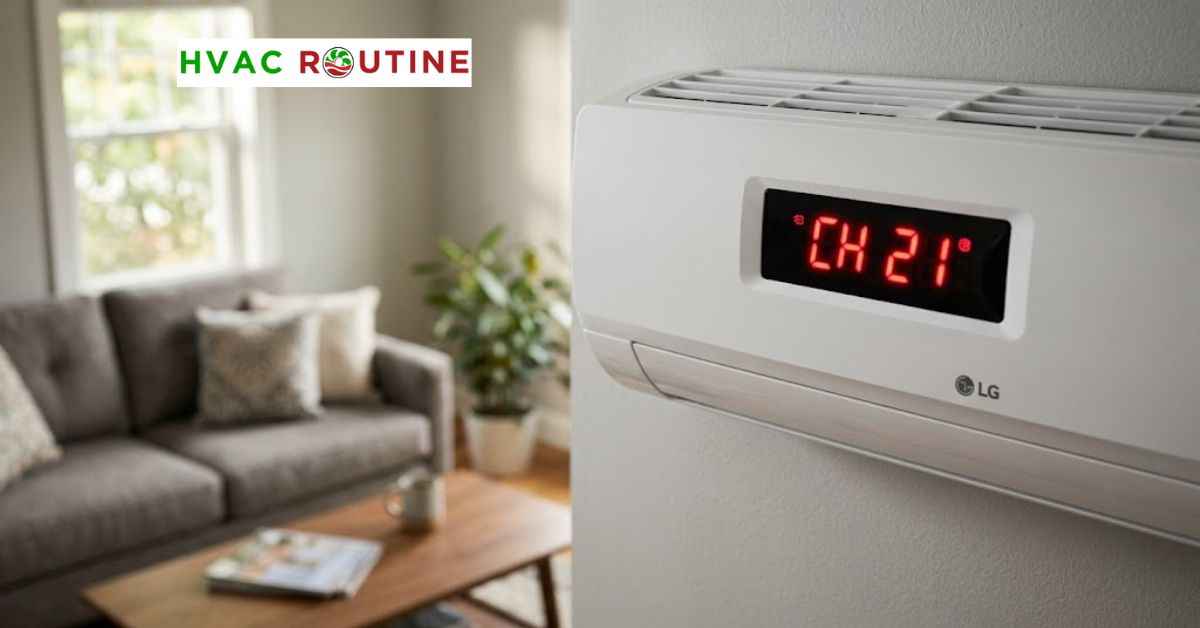
I still remember a scorching afternoon last summer when a homeowner called me in a complete panic. Their house felt like an oven, and the digital display on their wall unit was flashing the LG CH21 error code. When I arrived, I grabbed my digital multimeter, opened the outdoor condensing unit, and tested the mainboard. Sure enough, a massive power grid surge had completely fried the Inverter Power Module (IPM) chip.
Seeing your air conditioner shut down like this feels incredibly frustrating, but my years working in RAC (refrigeration and air conditioning) maintenance have taught me that this specific outdoor inverter overcurrent fault often looks worse than it actually is. Your system stops running immediately to protect the expensive internal electrical parts from permanent damage. I will show you exactly how to identify the root cause, test your components safely, and get your cold air flowing again.
Tools Required:
- A Phillips head screwdriver to open the metal access panels safely.
- A clean, soft-bristle brush for basic maintenance and dust removal.
- A digital multimeter to test the specific electrical resistance of the compressor.
- High-quality thermal paste (like Arctic Silver 5) if you plan to inspect the mainboard.
- Thick safety gloves to protect your hands from sharp metal condenser coils.
Safety Warnings:
You must take electrical safety seriously before you touch any part of your HVAC system. Shut off the main breaker switch to your air conditioner at your home panel, and wait a full five minutes to let the high-voltage capacitors discharge completely. These components hold a dangerous electrical charge even after you cut the power from the wall.
Step-by-Step Fixes:
Start your repair process by performing a complete power reset on the entire system. Next, wash your indoor air filters with warm water and let them air-dry completely. Step outside and remove any leaves, dirt, or debris blocking the outdoor condenser coils. Check the internal wiring for any loose connections. Finally, turn the system back on to see if the reset and cleaning cleared the fault.
When to Call a Pro:
You need to call a certified technician if the code returns after a power reset and thorough cleaning. Professionals possess the exact training required to test complex circuit boards, handle high-voltage wiring safely, and check refrigerant pressures. Attempting advanced electrical repairs without a license puts your personal safety and your home at risk.
What You'll Learn ⭐⭐⭐⭐⭐
- What Does the LG CH21 Error Code Mean?
- Understand the Inverter Power Module (IPM)
- LG Standard Inverter vs. Dual Inverter Differences
- Primary Causes Behind the Compressor Overcurrent Fault
- Detect Mechanical Compressor Stress and Refrigerant Leaks
- Step-by-Step Troubleshooting for the LG AC CH21 Error
- Perform a Hard Power Reset
- Wash the Indoor Unit Air Filters
- Inspect the Outdoor Thermistor Sensor
- Test the Compressor and PCB with a Multimeter (Advanced)
- Estimate Repair Costs, Time, and Part Replacements
- Implement Preventive Maintenance to Avoid Inverter Faults
- Schedule Quarterly Professional Cleaning
- Quick Answers to Common Troubleshooting Queries
- Key Takeaways
What Does the LG CH21 Error Code Mean?
The LG CH21 error code indicates a dangerous DC peak current spike in the outdoor unit. Your system’s mainboard constantly monitors the electrical draw of the heavy compressor motor. The protective relay trips the moment it detects an abnormally high electrical current—specifically when the direct current (DC) circuit exceeds 14 Amperes—flowing through the wires. This LG AC compressor protection sequence stops the motor dead in its tracks before it overheats or catches fire.
Understand the Inverter Power Module (IPM)
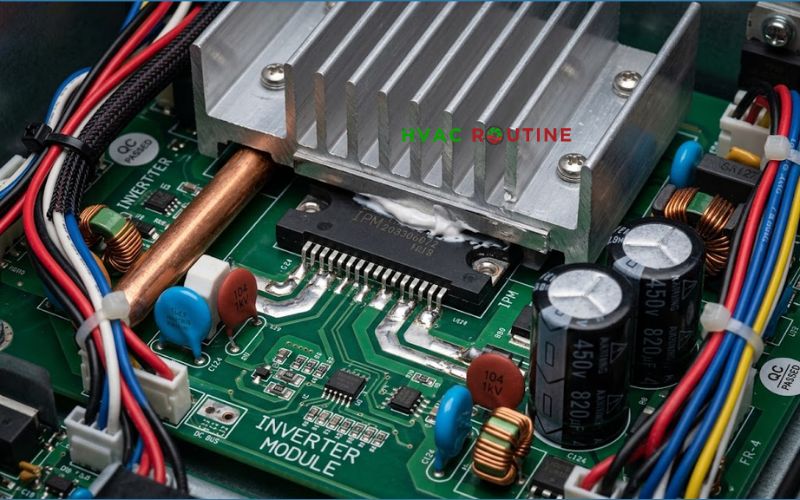
The Inverter Power Module sits right under the aluminum heat sink on the outdoor mainboard. This tiny computer chip converts incoming direct current power into alternating current to run the compressor. An IPM short happens when the chip overheats or receives a massive electrical voltage spike from the grid. The module shuts down the entire system instantly to prevent a catastrophic failure when it detects infinite current flow.
LG Standard Inverter vs. Dual Inverter Differences
LG manufactures both standard inverter and Dual Inverter air conditioning models. A Dual Inverter system uses a twin-rotary compressor that operates at wider speed ranges, meaning it pulls a slightly different amperage profile during its startup phase. However, the CH21 fault behaves exactly the same on both systems. It shuts down the mainboard to protect the twin rotors from burning out under heavy electrical stress.
Primary Causes Behind the Compressor Overcurrent Fault
Several different physical, electrical, and mechanical problems force your air conditioner to draw excessive amperage. Identifying the correct one saves you time and money.
Extreme Summer Heatwaves and Thermal Overloads
During severe summer heatwaves, the outside air temperature gets so high that your condenser struggles to reject heat. If the system runs constantly in 100-degree weather without a break, the compressor naturally runs hotter and pulls more amperage. This intense environmental heat traps inside the system, forcing the machinery to work twice as hard and eventually triggering the electrical protection fault.
Clean Dirty Indoor Filters and Blocked Vents
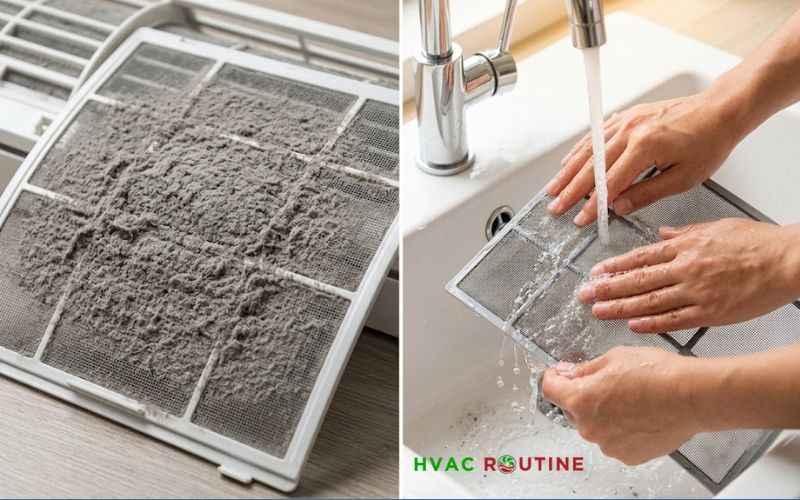
Clogged indoor air filters restrict the air that flows over the freezing cold evaporator coils. Similarly, blocked furniture and closed vents push cold air back into the system instead of out into your room. You must keep these air paths completely clear to maintain normal operating temperatures inside the machinery.
Remove Obstructions from Outdoor Condenser Coils
Your outdoor unit needs plenty of open space to dump collected heat into the outside air. Dirt, falling leaves, and overgrown bushes block the tiny aluminum fins on the bulky unit. A thorough condenser coil cleaning removes this thick blanket of dirt and lets the system breathe again.
Identify Electrical and Power Supply Issues
Poor electricity quality directly damages the highly sensitive electronic boards inside your unit. Sometimes, the problem is not a blown component, but simply a bad connection.
Inspect for Loose Wiring and Burnt Terminals
Before assuming a board is dead, I always check the physical connections. Constant vibration from the spinning fan and compressor can rattle the PCB jacks loose over time. A loose spade terminal creates high electrical resistance, which causes the voltage to drop and the amperage to spike. Inspect all the wire harnesses connected to the mainboard for loose fits, melted plastic, or black burn marks.
Prevent Damage from Power Surges
Severe lightning strikes and local grid fluctuations send massive voltage spikes into your home wiring. These sudden electrical surges fry the delicate components on the expensive outdoor mainboard. A blown power capacitor or a burnt copper trace causes an immediate outdoor PCB failure.
Inspect Degraded Thermal Paste on the Heat Sink
Over years of servicing these units, I always notice that the factory white thermal paste dries out and crumbles away after surviving a few harsh summers. The chip overheats rapidly and shuts the system down when it loses this vital cooling connection. Whenever I clean an outdoor board, I apply a fresh layer of high-grade compound like Arctic Silver 5. This small trick alone stops many random, intermittent shutdown problems.
Detect Mechanical Compressor Stress and Refrigerant Leaks
Internal mechanical failures inside the heavy compressor motor force it to pull massive amounts of electricity.
If your system develops a refrigerant leak, it loses its ability to carry heat away properly. The compressor has to run longer and harder to reach the target temperature. Because the cold refrigerant gas normally cools the actual compressor motor as it flows through, a low charge causes the motor to overheat and pull too much current. Furthermore, a grounded compressor happens when the internal copper windings melt and scrape against the outer metal casing.
Step-by-Step Troubleshooting for the LG AC CH21 Error
Follow these exact steps to narrow down the problem safely and quickly.
Perform a Hard Power Reset
You can sometimes clear a temporary computer glitch just by cutting the power completely. Flip the main breaker switch to the “off” position for a full five minutes. This deliberate action allows the mainboard to dump its memory and reset the LG air conditioner default settings. Turn the breaker back on and see if the unit starts normally without flashing the lights.
Wash the Indoor Unit Air Filters
Open the plastic front panel of your indoor air handler to access the reusable mesh filters. Pull them out gently and rinse away the thick layers of dust using lukewarm tap water. Shake off the excess water and let them dry completely in the sun before putting them back. Running the system with wet filters pushes damaging moisture straight into the electrical controls.
Inspect the Outdoor Thermistor Sensor
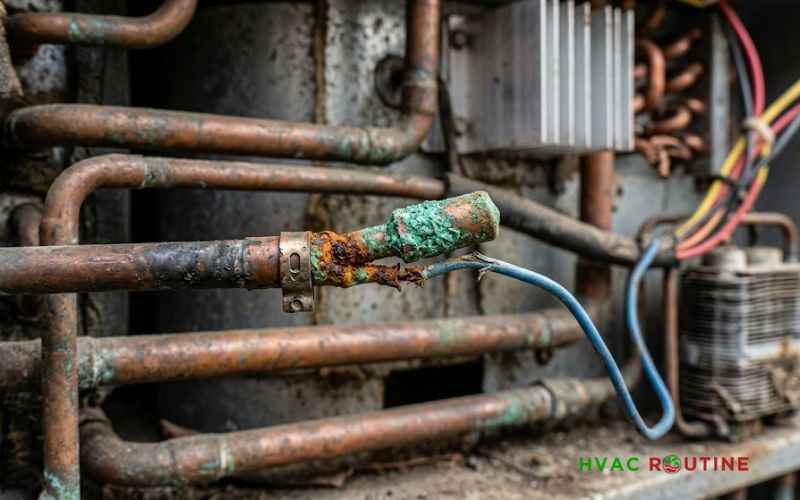
Sometimes the circuit board is perfectly fine, but a tiny temperature sensor sends the wrong signal. Check the outdoor thermistors located near the condenser coils and the compressor discharge pipe. Look specifically for the small copper sensor head, which is usually connected by a thin blue or black wire. If you see green corrosion or rust on the sensor head, it will send inaccurate resistance readings to the mainboard, causing it to miscalculate the load and trigger the error.
Test the Compressor and PCB with a Multimeter (Advanced)
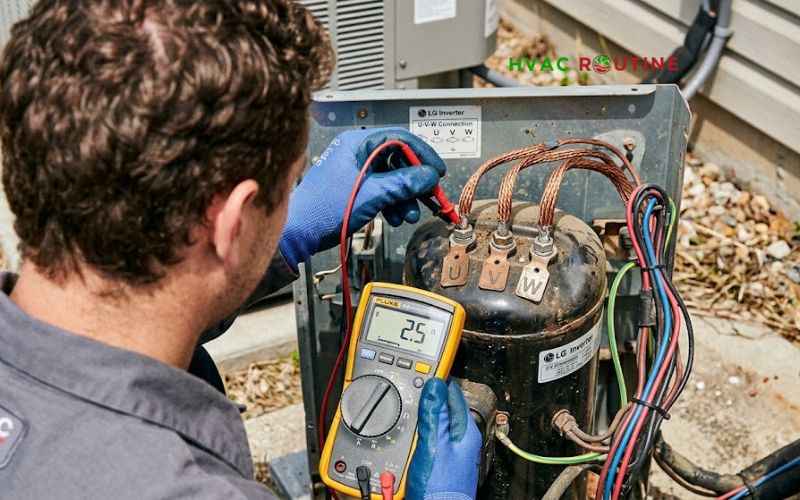
You can confirm a failed compressor motor by testing the specific electrical resistance of the internal windings. Set your digital multimeter to the Ohms (Ω) setting, disconnect the power completely, and remove the wire harness from the top of the compressor. Measure the resistance between the U, V, and W terminals on the compressor head.
A healthy LG compressor usually shows an equal resistance of 1.5 to 3.0 ohms between any two pins. Your compressor winding is broken or shorted if the meter reads ‘OL’ (open loop) or zero ohms. Next, test for a grounded motor by placing one meter probe on a terminal and the other probe on the bare copper pipe. The meter must read ‘OL’; any numerical reading indicates the internal motor wires are touching the outer metal shell.
Estimate Repair Costs, Time, and Part Replacements
You need to know what you might spend if the problem requires brand-new hardware. Review the table below to compare the costs and timeframes for common repairs.
| Component Issue | Repair Strategy | Estimated Cost | Estimated Time to Fix |
| Dried Thermal Paste | Clean old paste and apply fresh layer | $15 – $25 | 45 Minutes |
| Corroded Thermistor | Unplug the old sensor and wire in a new one | $30 – $60 | 30 Minutes |
| Blown IPM Chip | Desolder and solder a new chip onto the board | $50 – $100 | 2 – 3 Hours |
| Fried Main PCB | Order and install a complete replacement board | $150 – $350 | 1 Hour |
| Grounded Compressor | Recover refrigerant, weld new motor, recharge system | $600 – $1,200 | 4 – 6 Hours |
(Note: Prices vary based on your local labor rates and specific LG model).
Implement Preventive Maintenance to Avoid Inverter Faults
You can stop these expensive breakdowns entirely by treating your air conditioner well.
Schedule Quarterly Professional Cleaning
Industry engineering groups strongly recommend cleaning your heat exchange coils regularly. Clean coils keep the compressor running cool and lower your monthly home electricity bill. Always ask your technician to check the electrical connections tightly during their scheduled visit.
Install a Whole-House Surge Protector
You should protect your financial investment from bad weather and unpredictable power grids. Hire a licensed electrician to install a surge protector directly inside your main home breaker box. This small device blocks dangerous voltage spikes before they ever reach your sensitive air conditioner.
Quick Answers to Common Troubleshooting Queries
Let me address some specific questions you might have right now about this exact problem.
Can I Ignore the LG Mini Split CH21 Error and Keep Running the AC?
No, you cannot simply ignore this warning and force the unit to run anyway. I once had a client who decided to ignore the warning. Every time his system tripped, he walked outside and forcefully reset the breaker to get ten more minutes of cool air. He did this for three days straight. That forced operation pulled so much heat and electricity that it permanently welded the internal copper wires together. What should have been a simple circuit board repair turned into a $1,200 compressor replacement job. Always leave the unit off until you resolve the root cause.
Does a CH21 Code Mean I Need a New Compressor?
This specific system fault rarely means the heavy compressor itself has failed permanently. A burnt PCB, a corroded thermistor, or a tiny fried chip causes this exact problem almost every single time. A certified professional must test the U-V-W electrical resistance to confirm which part actually failed before you spend any money on major replacement parts.
Key Takeaways
- You must always put your personal safety first when you deal with high-voltage HVAC equipment.
- Keep your filters spotless and your outdoor coils free of debris to ensure smooth airflow and prevent thermal overload.
- Check for simple issues like loose wiring, corroded sensors, and dried thermal paste before assuming the mainboard is dead.
- Use a digital multimeter to verify the exact resistance values of your compressor before ordering expensive circuit boards.
- Call a trained professional immediately if basic cleaning and resetting do not clear the LG CH21 error code.

1 thought on “LG CH21 Error Code: Meaning, Causes, and Step-by-Step Fixes”