If you are wondering how much is a new AC unit for a 1500 sq ft house, you are probably looking for one simple number you can use as a budget.
The problem is that HVAC pricing rarely works that way.
You might get one quote for $5,000 and another for $9,000 for what appears to be the same 1,500-square-foot house.
That does not automatically mean one contractor is overcharging you.
The two quotes may include different equipment, efficiency levels, labor, ductwork, electrical work, thermostats, permits, warranties, or installation conditions.
For 2026, a practical planning range for a professionally installed central AC replacement in a typical U.S. home is roughly $4,000 to $12,500 or more, although the actual price can fall below or above that range depending on the project.
Current published cost guides also show considerable variation.
That variation is important because a national average can be misleading when one source measures a straightforward equipment replacement and another includes more extensive HVAC work.
This guide will help you understand what you could realistically pay, what size AC you may need, what can push the price higher, and how to compare contractor quotes without getting lost in HVAC terminology.
Quick answer: A new central AC system for a 1,500 sq ft U.S. home can reasonably fall around $4,000 to $12,500+ installed in 2026, with the final cost depending on equipment, sizing, efficiency, ductwork, electrical requirements, labor, location, and installation complexity.
What You'll Learn ⭐⭐⭐⭐⭐
- 1,500 Sq Ft AC Cost at a Glance
- How much is a new AC unit for a 1500 sq ft house?
- What size AC unit does a 1,500 sq ft house need?
- Is 2 tons enough for a 1,500 sq ft house?
- Is 2.5 tons a good size for 1,500 sq ft?
- 2 Ton vs. 2.5 Ton vs. 3 Ton AC for 1,500 Sq Ft
- Why Square Footage Alone Cannot Size Your AC
- What Is a Manual J Load Calculation?
- What should an HVAC contractor check before recommending an AC?
- How Much Does a 2-Ton, 2.5-Ton, or 3-Ton AC Cost?
- What does AC installation cost per square foot?
- What does a new AC system actually include?
- AC-Only Replacement vs. Full HVAC Replacement
- Can you replace only the outdoor AC condenser?
- How Much More Does a Two-Stage or Variable-Speed AC Cost?
- What Does SEER2 Mean?
- How Much Can a New AC Lower Your Electricity Bill?
- Should you buy a heat pump instead of central AC?
- Hidden Costs That Can Increase Your AC Installation Bill
- Electrical upgrades: Your existing panel, breaker, wiring, or disconnect may not support the new equipment as planned.
- Refrigerant line replacement
- What Does a Typical AC Quote Not Include?
- Three Common AC Installation Scenarios
- A Realistic 1,500 Sq Ft AC Budget Example
- Estimate Your 1,500 Sq Ft AC Replacement Budget
- Does AC Brand Affect the Price?
- How to Compare AC Quotes for a 1,500 Sq Ft House
- What Should You Get in Writing From an HVAC Contractor?
- How Long Does It Take to Install a New AC?
- What AC Warranty Should You Look For?
- Can You Reuse Existing Ductwork?
- How Can You Pay for a New AC System?
- How Much Can a New AC Lower Your Electricity Bill?
- Repair or Replace Your Existing AC?
- How Long Does a Central AC System Last?
- Common Mistakes Homeowners Make When Buying a New AC
- A Simple Contractor Quote Scorecard
- When Should You Call a Professional HVAC Contractor?
- Frequently Asked Questions
- Final Verdict: What Should You Budget for a 1,500 Sq Ft House?
1,500 Sq Ft AC Cost at a Glance
Here is the quickest way to put the numbers into perspective.
| Project Type | Practical 2026 Planning Range | Typical Situation |
|---|---|---|
| Basic AC replacement | $4,000–$8,000 | Existing ducts and electrical service work well |
| Mid-range system | $6,000–$10,000 | Better equipment or upgraded controls |
| High-efficiency system | $8,000–$14,000+ | Premium equipment and advanced features |
| Complex replacement | $8,000–$12,500+ | Duct, electrical, access, or relocation work |
| Major duct replacement | $10,000+ overall project possible | Extensive distribution-system work |
These numbers are budgeting estimates, not fixed national prices.
Current sources publish different ranges because they use different equipment categories, locations, installation scopes, and data sets.
For example, This Old House currently reports about $6,345 to $10,575, with an $8,460 average, for central AC replacement based on its 2026 pricing data and homeowner survey. eGuide uses different assumptions and publishes a broader range for central AC replacement and complete HVAC work. why I would not make a buying decision based on one “average” price.
How much is a new AC unit for a 1500 sq ft house?
- The answer depends on what you mean by “new AC unit.”
- Are you buying the outdoor condenser only?
- Are you replacing the indoor coil and outdoor unit?
- Are you replacing the entire HVAC system?
- Are you also repairing the ducts?
Those questions can change the project price by thousands of dollars.
AC equipment only
Equipment-only pricing generally covers some combination of the outdoor condenser and related components.
It does not necessarily include labor, permits, thermostat work, ductwork, electrical changes, removal, disposal, or startup.
Complete central AC replacement
A complete replacement can include:
- Outdoor condenser
- Indoor evaporator coil
- Refrigerant connections
- Electrical connections
- Thermostat
- Condensate drain work
- Labor
- Old equipment removal
- Startup and testing
That is why a $3,000 equipment price and a $7,000 installed quote can both be reasonable when they cover completely different scopes of work.
What size AC unit does a 1,500 sq ft house need?
This is where homeowners often get conflicting answers.
Some online calculators suggest 2 tons.
Others suggest 2.5 tons.
Some guides place certain 1,500-square-foot homes around 2.5 to 3 tons.
There is a good reason for the disagreement.
Square footage alone cannot accurately size an air conditioner.
The U.S. Department of Energy recommends determining heating and cooling loads first instead of relying on simple rules of thumb. DOE notes that oversized systems can increase costs, waste energy, cycle too frequently, and compromise comfort. does AC tonnage mean?
One ton of cooling capacity equals approximately 12,000 BTUs per hour.
That means:
| AC Size | Cooling Capacity |
|---|---|
| 2 tons | 24,000 BTU/h |
| 2.5 tons | 30,000 BTU/h |
| 3 tons | 36,000 BTU/h |
These numbers describe equipment capacity.
They do not tell you exactly what your house needs.
Is 2 tons enough for a 1,500 sq ft house?
It can be appropriate for some homes.
A well-insulated house in a moderate climate may have a significantly different cooling load from an older home in a very hot climate.
Is 2.5 tons a good size for 1,500 sq ft?
It can be.
Some current manufacturer guidance places 2.5 tons within the general range for homes around 1,500 square feet, but manufacturers also emphasize that climate and building conditions affect sizing. -ton system make sense?
Yes, in a home with a higher cooling load.
But you should not jump from 2.5 tons to 3 tons simply because you want the house to cool faster.
An oversized system can satisfy the thermostat quickly without running long enough to remove as much indoor moisture.
2 Ton vs. 2.5 Ton vs. 3 Ton AC for 1,500 Sq Ft
Here is a simple comparison to help you understand the conversation you may have with an HVAC contractor.
| AC Size | BTU/h | General Position |
|---|---|---|
| 2 ton | 24,000 | May suit a lower-load home |
| 2.5 ton | 30,000 | Common starting point for many 1,500 sq ft homes |
| 3 ton | 36,000 | May suit a higher-load home |
Do not use this table to make the final purchase decision.
Use it to understand the terminology when you receive quotes.
Why Square Footage Alone Cannot Size Your AC
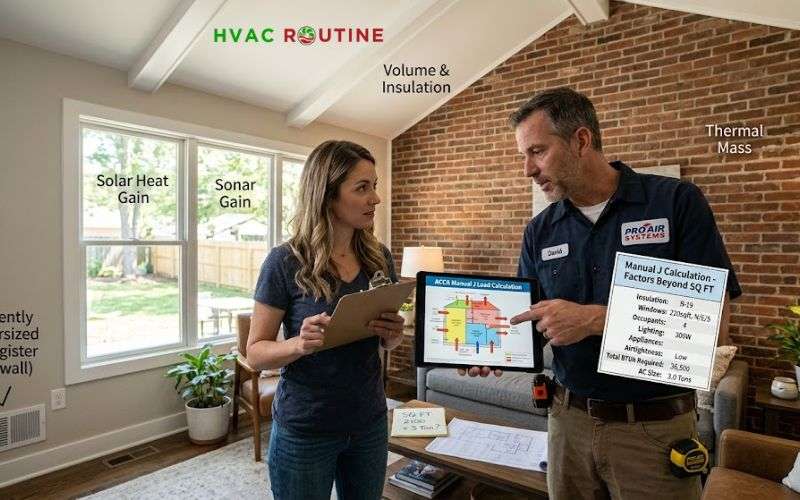
Imagine two homes that each have 1,500 square feet.
The first home has modern windows, good insulation, shaded walls, tight construction, and properly designed ducts.
The second home has older windows, more air leakage, weaker insulation, and ductwork running through a very hot attic.
The homes have the same floor area.
Their cooling requirements can still be different.
That’s why a contractor who recommends the exact same AC size for every 1,500-square-foot home without looking at the building deserves some extra questions.
What Is a Manual J Load Calculation?
Manual J provides a recognized method for calculating residential heating and cooling loads.
ACCA identifies Manual J as the ANSI-recognized standard for residential HVAC load calculations. ulation can account for factors such as:
- Climate
- Windows
- Insulation
- Air leakage
- Building orientation
- Ceiling conditions
- Duct loads
- Occupancy
- Internal heat gains
The next step is equipment selection.
ACCA’s Manual S provides guidance for selecting and sizing residential HVAC equipment using calculated loads, manufacturer performance data, and local design conditions. ms:
- Manual J calculates what the house needs.
- Manual S helps select equipment that can meet that need.
- Manual D addresses duct design.
This process gives you a much stronger basis for equipment selection than a simple “one ton per X square feet” rule.
What should an HVAC contractor check before recommending an AC?
Before you accept a recommendation, the contractor should have enough information to understand the home.
A proper evaluation can include:
- Home size: The conditioned floor area provides the starting point.
- Ceiling height: High ceilings can change the volume and thermal characteristics of the space.
- Windows: Window area, orientation, glass type, and shading can influence heat gain.
- Insulation: Insulation affects how quickly heat moves into the home.
- Air leakage: Outside air entering through gaps can increase the cooling load.
- Climate: Miami and Seattle obviously do not present the same cooling conditions.
ACCA’s Manual S specifically notes that equipment selection needs to account for regional outdoor conditions and building conditions.
The contractor should consider duct size, condition, insulation, leakage, and layout.
Existing HVAC equipment
The age, condition, and compatibility of existing components can change the best replacement strategy.
Internal heat sources
Occupants, lighting, appliances, and electronics all contribute heat.
How Much Does a 2-Ton, 2.5-Ton, or 3-Ton AC Cost?
Published 2026 cost guides show wide ranges.
One current guide reports approximately:
| System Size | Approximate Installed Cost |
|---|---|
| 2 ton | $2,500–$5,500 |
| 2.5 ton | $2,700–$6,000 |
| 3 ton | $3,000–$6,500 |
These figures represent broad market estimates rather than guaranteed prices for a 1,500-square-foot home.
Your local quote may come in higher when you choose premium efficiency, variable-speed equipment, new controls, ductwork, electrical work, or more complicated installation.
That is why comparing tonnage alone does not tell you which quote offers the better value.
What does AC installation cost per square foot?
Cost per square foot can help you build a rough renovation budget.
It should not determine the AC size.
For example, suppose a complete AC project costs $7,500.
The simple calculation would be:
$7,500 ÷ 1,500 sq ft = $5 per sq ft
That gives you a budgeting reference.
It does not mean that every 1,500-square-foot home should cost exactly $7,500.
Think of price per square foot as a budgeting metric and Manual J as a sizing tool.
What does a new AC system actually include?
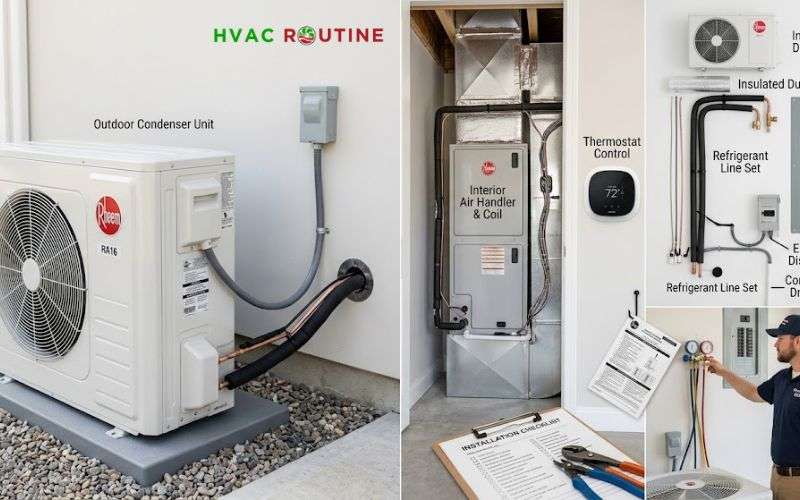
The phrase “AC unit” can hide a lot of detail.
Outdoor condenser: The outdoor unit handles the heat-rejection side of the cooling cycle.
Indoor evaporator coil: The indoor coil absorbs heat from the air inside the house.
Furnace or air handler: Depending on the system, the indoor equipment may work with a furnace or use an air handler.
Thermostat: The thermostat controls the system based on the settings and capabilities of the equipment.
Refrigerant lines: These connect the indoor and outdoor components in a typical split system.
Condensate drain: Cooling removes moisture from the indoor air, so the system needs proper condensate drainage.
Ductwork: A central system relies on supply and return ducts to move conditioned air around the home.
A good quote should clearly tell you which of these components the contractor will replace.
AC-Only Replacement vs. Full HVAC Replacement
This distinction can save you from comparing completely different projects.
| Project | What It Usually Includes | Typical Situation |
|---|---|---|
| Condenser-only replacement | Outdoor unit | Existing indoor equipment remains suitable |
| AC replacement | Outdoor condenser + indoor coil | Cooling system needs replacement |
| AC + air handler | Cooling + indoor air-handling equipment | Common in some all-electric homes |
| AC + furnace | Cooling + heating equipment | Existing furnace also needs replacement |
| Full HVAC replacement | Major heating, cooling, controls, and related components | Multiple major components are aging |
I would not replace a perfectly usable furnace just because you are replacing the AC.
Ask the contractor to explain its age, condition, compatibility, and expected remaining life.
Can you replace only the outdoor AC condenser?
Sometimes.
But you should not assume that any new condenser will work properly with an old indoor coil.
The contractor should verify:
- Equipment compatibility
- Refrigerant requirements
- Matched-system performance
- Efficiency
- Manufacturer requirements
- Warranty conditions
Ask for the exact indoor and outdoor model numbers.
That gives you something concrete to compare instead of a vague description such as “high-efficiency 2.5-ton AC.”
How Much Does AC Cost by System Type?
The technology inside the system also affects price.
Single-stage AC
A single-stage compressor generally operates at one main cooling level.
This design often carries a lower upfront price than more advanced systems.
Two-stage AC
A two-stage system can operate at different capacity levels.
That can improve part-load operation and comfort in appropriate homes.
Variable-speed or variable-capacity AC
These systems can adjust cooling output over a wider range.
They usually cost more upfront.
The additional cost can make sense for a homeowner who values more precise comfort, humidity control, quieter operation, or long-term efficiency.
Ducted heat pump
A heat pump can provide both heating and cooling.
That can make it worth considering when you already need to replace an aging heating system.
How Much More Does a Two-Stage or Variable-Speed AC Cost?
Published market estimates vary considerably.
One current technical cost guide places two-stage systems around $4,700 to $9,000 and variable-capacity systems around $7,800 to $14,000. ad market references.
| Technology | Upfront Position | Comfort Potential | Humidity Control | Best For |
|---|---|---|---|---|
| Single-stage | Lower | Basic | Basic | Budget-focused buyers |
| Two-stage | Mid-range | Better | Better potential | Comfort-focused homeowners |
| Variable-speed | Higher | Excellent | Strong potential | Premium comfort and efficiency |
The most expensive system is not automatically the best financial choice.
What Does SEER2 Mean?
SEER2 measures seasonal cooling efficiency.
ENERGY STAR uses SEER2 and EER2 criteria when evaluating qualifying residential central air conditioners and heat pumps. ing can reduce energy consumption under comparable operating conditions.
But here’s where homeowners sometimes make a costly mistake.
They see the highest efficiency rating and assume it must provide the best value.
That isn’t always true.
An easy payback example
Suppose:
System A costs $2,000 less.
System B costs $2,000 more but saves an estimated $250 per year.
The simple payback would be:
$2,000 ÷ $250 = 8 years
This is only an example.
Your actual savings depend on climate, electricity rates, cooling hours, thermostat settings, home efficiency, equipment performance, and system sizing.
I would compare the extra upfront cost against realistic annual savings before paying a large premium for efficiency.
How Much Can a New AC Lower Your Electricity Bill?
A new air conditioner can use less electricity than an older inefficient model.
But there is no honest way to promise every homeowner a specific monthly saving.
Your bill depends on:
- Equipment efficiency
- AC capacity
- Runtime
- Outdoor temperature
- Thermostat settings
- Insulation
- Windows
- Ductwork
- Air leakage
- Electricity rates
- Occupancy
Here’s a simple example.
If an old AC needs long runtimes because it has poor efficiency, replacing it with a correctly sized and more efficient model can reduce energy use.
But if your home loses a lot of conditioned air through leaky ducts, the new AC cannot solve that problem by itself.
Sometimes the best energy upgrade includes both the equipment and the building.
Should you buy a heat pump instead of central AC?
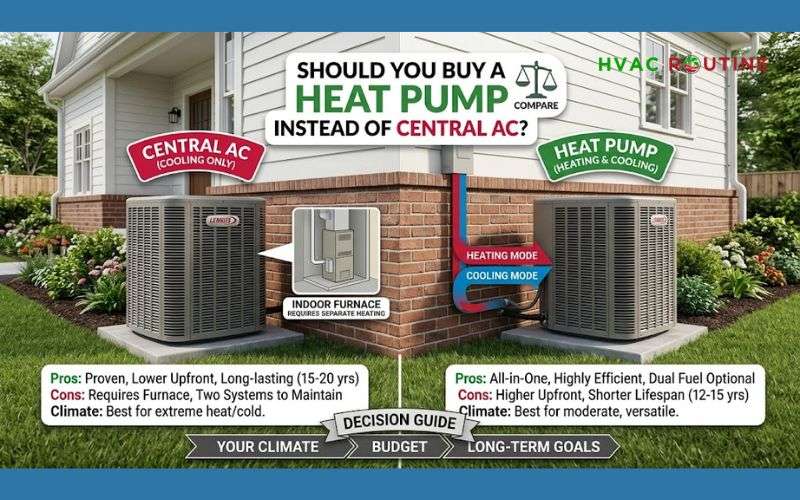
If you only need cooling and your furnace still has plenty of useful life, a conventional central AC may make sense.
If both your heating and cooling systems need replacement, a heat pump deserves serious consideration.
An air-source heat pump transfers heat between the home and outdoor air.
That makes it different from a geothermal system, which uses the ground as the heat-transfer source.
A heat pump may make sense when
- You want one system for heating and cooling.
- Your existing heating equipment is old.
- You want to compare electric heating and cooling options.
- Your local climate and utility costs support the system.
Central AC may make more sense when
- Your heating system is relatively new.
- You only need to replace cooling equipment.
- You already have a suitable furnace and do not want to change the heating setup.
- Proper sizing still matters for heat pumps.
ACCA’s Manual S specifically addresses heat-pump equipment selection using load calculations, manufacturer data, and local conditions. tallation Costs Differ by State
A 1,500-square-foot home does not cost the same to cool or equip in every part of the country.
Labor rates, climate, regulations, contractor demand, equipment distribution, and installation conditions can all affect pricing.
For example, local 2026 pricing pages show 1,500-square-foot replacement ranges around $4,800 to $8,500 in one North Carolina market and around $6,500 to $18,540 in a Florida market. al averages.
They simply demonstrate why your location matters.
Climate also matters
A homeowner in a hot, humid region may run AC much more than someone in a cooler climate.
That can change the value equation for higher-efficiency equipment.
Labor also matters
A high-cost metropolitan area can produce higher contractor quotes than a lower-cost market.
Local requirements matter
Permit and code requirements vary by jurisdiction.
That is another reason to get a quote from someone who works in your area.
Hidden Costs That Can Increase Your AC Installation Bill
This is the section I would pay the most attention to before signing a contract.
A low initial quote can look attractive until you discover what it leaves out.
Duct repairs or replacement: Old ducts may need sealing, insulation, resizing, or replacement.
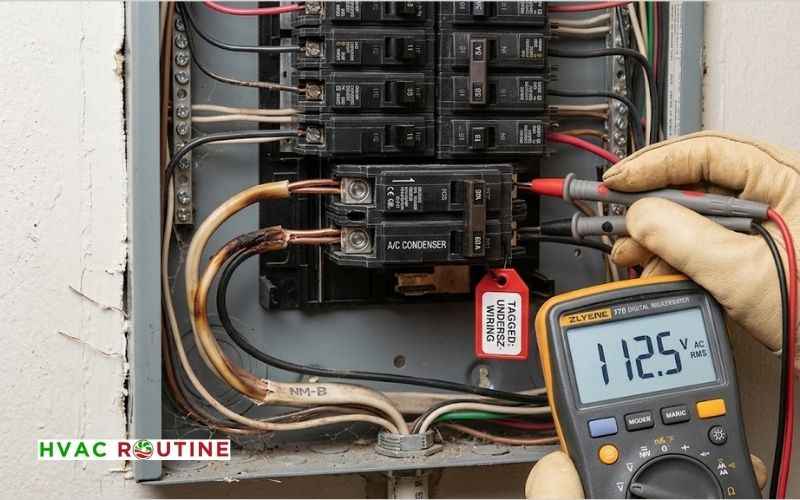
Electrical upgrades: Your existing panel, breaker, wiring, or disconnect may not support the new equipment as planned.
Refrigerant line replacement
The existing line set may not be suitable for the new system.
- Condensate drain work: A damaged or poorly configured drain can require additional repairs.
- Thermostat: A basic thermostat and an advanced communicating control do not cost the same.
- Concrete pad: The outdoor condenser may need a suitable support base.
- Equipment relocation: Moving equipment can require additional refrigeration, electrical, duct, or structural work.
- Difficult attic access: A cramped attic can increase labor requirements.
- Permits: Your local jurisdiction may require permits and inspections.
- Old equipment removal: Some contractors include removal and disposal.
Others charge for it separately.
Before you sign, ask:
“Is there anything that could reasonably be added to this quote after the work begins?”
That question can reveal a lot.
What Does a Typical AC Quote Not Include?
Never assume that two quotes cover the same work.
Check whether each quote includes:
- Outdoor equipment
- Indoor coil
- Thermostat
- Labor
- Equipment removal
- Refrigerant-related work
- Electrical work
- Ductwork
- Condensate work
- Concrete pad
- Permits
- Startup and testing
- Warranty coverage
If one contractor includes duct repairs and another does not, their bottom-line prices are not directly comparable.
Three Common AC Installation Scenarios
Scenario 1: Straight replacement
Your house already has good ductwork and suitable electrical service.
The contractor removes the old system and installs a compatible replacement.
This situation usually keeps the project toward the simpler end of the local price range.
Scenario 2: High-efficiency upgrade
You choose a higher-efficiency system with upgraded controls.
The equipment costs more.
You then compare the extra purchase price with expected operating savings.
Scenario 3: Difficult replacement
Your indoor unit sits in a difficult attic.
The ducts need repair.
The electrical system needs work.
Suddenly, the “AC replacement” becomes a larger home project.
Scenario 4: Complete HVAC replacement
The AC and furnace are both old.
Replacing them together may provide a better long-term solution than installing new cooling equipment while keeping an aging heating system.
A Realistic 1,500 Sq Ft AC Budget Example
Let’s say you live in a 1,500-square-foot house and your existing ductwork remains in decent shape.
Your hypothetical contractor gives you this quote:
AC equipment: $3,500
Labor: $2,000
Thermostat: $300
Electrical work: $700
Duct repairs: $1,000
Permits and other project costs: $300
Your total would be:
$3,500 + $2,000 + $300 + $700 + $1,000 + $300 = $7,800
That does not mean $7,800 is the “correct” price for your house.
It simply shows how separate line items can build a complete project cost.
What Does a New AC Cost in Different 1,500 Sq Ft Homes?
Consider these four homeowners.
Home A: Well-insulated home
The house has good insulation, efficient windows, usable ductwork, and suitable electrical service.
The project needs a straightforward replacement.
Home B: Older home
The house has average insulation, some duct leakage, and an outdated thermostat.
The homeowner pays for additional work.
Home C: High-efficiency upgrade
The homeowner chooses a premium variable-capacity system.
The upfront cost rises, but the homeowner expects to operate the system for many years.
Home D: Difficult installation
The equipment sits in a difficult attic location and requires duct and electrical modifications.
The project lands toward the higher end of the budget.
All four homes have 1,500 square feet.
Their AC replacement costs can still be very different.
That is the biggest lesson to remember when reading online price guides.
Estimate Your 1,500 Sq Ft AC Replacement Budget
You can create a rough planning estimate with this formula:
Estimated Project Cost = Equipment + Labor + Electrical + Ductwork + Thermostat + Permits + Removal + Other Required Work
For a useful calculator, you could enter:
- Home size
- System type
- Estimated tonnage
- Efficiency level
- Ductwork condition
- Electrical condition
- Installation difficulty
- Location
The result should show:
- Estimated project range
- Potential additional costs
- Questions to ask your contractor
The calculator should clearly state that it provides a budget estimate only.
It should never present itself as a substitute for a professional cooling-load calculation.
Does AC Brand Affect the Price?
Yes, but not in the simple way that “Brand X is expensive and Brand Y is cheap.”
The final price can depend on:
- Product tier
- Efficiency
- Compressor technology
- Controls
- Warranty
- Distributor pricing
- Contractor markup
- Local availability
Major brands commonly seen in U.S. residential HVAC include Carrier, Trane, Lennox, Rheem, Goodman, American Standard, and others.
That does not mean one brand automatically offers the best value.
I would compare the specific model and system combination, not just the logo on the equipment.
What should you look for in an AC brand?
- Warranty coverage
- Local service availability
- Parts availability
- Equipment efficiency
- Certified matched-system performance
- Installer experience
A premium brand installed poorly can deliver a worse result than a more affordable system installed correctly.
How to Compare AC Quotes for a 1,500 Sq Ft House
This is where a little patience can save you a lot of money.
Suppose you receive three quotes:
Quote A: $5,800
Quote B: $7,200
Quote C: $8,400
Do not automatically choose Quote A.
Ask what each contractor included.
Use a table like this.
| Quote Item | What You Should Check |
|---|---|
| AC capacity | Does it match the calculated load? |
| Exact model numbers | Can you compare the actual equipment? |
| SEER2 | What efficiency does the complete system achieve? |
| Indoor coil | Is it included? |
| Labor | Is installation fully covered? |
| Ductwork | Is repair or modification included? |
| Electrical | Does the price include required upgrades? |
| Thermostat | What model is included? |
| Removal | Who removes the old system? |
| Permit | Who handles it? |
| Warranty | Parts and labor terms |
| Startup | Is commissioning included? |
One question I would always ask
“Can you show me how you arrived at this system size?”
A confident contractor should be able to explain the recommendation.
You can also ask:
“What exactly is included in this price, and what could make the final bill higher?”
That question is especially useful.
What Should You Get in Writing From an HVAC Contractor?
Before signing, make sure the proposal identifies:
- System capacity
- Exact model numbers
- Efficiency rating
- Indoor and outdoor components
- Labor
- Thermostat
- Ductwork
- Electrical work
- Permits
- Removal
- Startup and testing
- Warranty
- Total price
You want a quote that leaves as little room for misunderstanding as possible.
What Happens During a Professional AC Installation?
A standard replacement usually involves several steps.
- Load and equipment review: The contractor confirms the system selection and installation requirements.
- Old equipment removal: The old equipment gets removed as part of the agreed scope.
- Indoor component installation: The installer fits the evaporator coil, air handler, or other indoor equipment.
- Outdoor condenser installation: The outdoor unit gets positioned and connected.
- Refrigeration and electrical work: The technician completes the required connections and system preparation.
- Drain and airflow checks: The installer checks drainage and airflow.
- Startup and testing: The system should run through an appropriate startup and testing process before the project is considered complete.
The exact procedure can differ by equipment and local requirements.
How Long Does It Take to Install a New AC?
A simple replacement may take far less time than a complete HVAC project.
A straightforward change-out can often fit into a single workday.
Duct replacement, electrical upgrades, equipment relocation, difficult attic access, or inspection requirements can extend the schedule.
Ask your contractor for a project-specific timeline.
Do not rely on a generic promise such as “it will only take a few hours.”
How to Check a New AC Installation After the Contractor Leaves
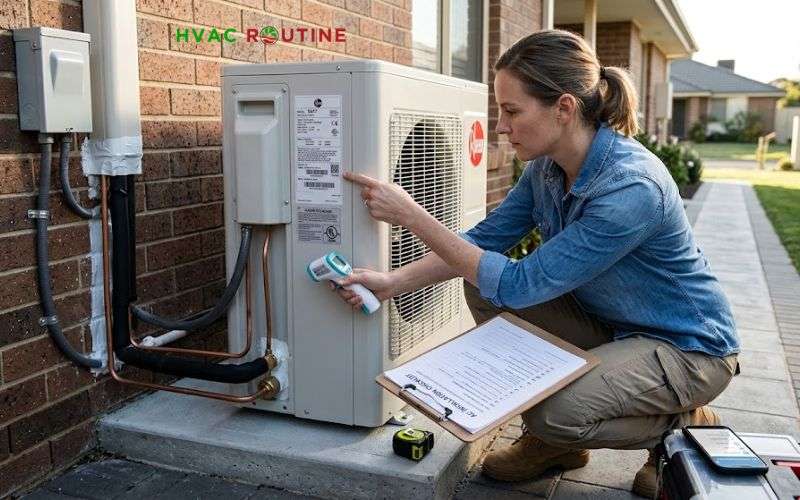
You don’t need to open the refrigeration system or perform electrical work.
A basic homeowner check can still catch obvious issues.
- Check the thermostat: Make sure the controls respond correctly.
- Check airflow: Make sure the expected rooms receive conditioned air.
- Watch for water: Look for unexpected condensate leakage.
- Listen for unusual sounds: Persistent rattling, grinding, or other abnormal noise deserves attention.
- Look for ice: Ice formation can indicate a system problem.
Do not attempt refrigeration repairs yourself.
Contact the installer or a qualified HVAC professional.
Keep your documents
Save the:
- invoice
- equipment model numbers
- warranty paperwork
- installation records
- permit documents
- manuals
These records can become very useful later.
What AC Warranty Should You Look For?
Don’t look only at the number of years.
Look at what the warranty actually covers.
- Parts warranty: This can cover qualifying replacement parts.
- Compressor warranty: The compressor may have separate terms.
- Labor warranty: The installing contractor may offer separate labor coverage.
- Registration: Some manufacturers require timely registration for certain warranty benefits.
- Transferability: Warranty terms may change when the house changes ownership.
- Exclusions: Some labor, refrigerant, maintenance, or other costs may not receive warranty coverage.
A “10-year warranty” does not automatically mean every AC-related repair will be free for 10 years.
How Much Does Ductwork Affect AC Installation Cost?
Ductwork can make a major difference to your final bill.
One current 2026 guide estimates new ductwork at several thousand dollars for a typical residential installation, while broader HVAC cost guides place duct-included projects well above basic replacement prices.
The actual cost depends on:
- Home layout
- Number of ducts
- Return-air design
- Material
- Insulation
- Attic or crawlspace access
- Existing duct removal
- Local labor
A new AC cannot fully compensate for badly leaking or poorly designed ducts.
Signs that your ducts may need attention
Look for:
- Uneven room temperatures
- Weak airflow
- Noisy registers
- Visible duct damage
- Poor duct insulation
- Excessive dust
- High energy bills despite normal equipment operation
Can You Reuse Existing Ductwork?
Often, yes.
Existing ducts can remain in service when their size, condition, insulation, layout, and airflow work with the new system.
The contractor should inspect the duct system before assuming it can remain unchanged.
ACCA’s system-design guidance specifically ties duct design to the selected equipment and system requirements.
e to Replace Your AC?
There is no magic month that guarantees the lowest price everywhere.
Planning matters more than chasing a particular calendar date.
Replacing an aging system before a complete failure gives you time to:
- compare several contractors
- review equipment options
- inspect ductwork
- evaluate efficiency
- compare financing
- check local incentives
An emergency replacement gives you much less negotiating room.
How Can You Pay for a New AC System?
You have several options.
Cash: Paying upfront avoids financing interest.
Contractor financing:
Some HVAC companies offer financing through third-party lenders.
Compare the interest rate, fees, promotional period, monthly payment, and total repayment.
Home improvement financing:
Other lending products may cover HVAC projects.
Again, compare total borrowing cost rather than focusing only on the monthly payment.
Utility rebates:
Some utility companies offer incentives for qualifying equipment.
Check current requirements before making your equipment decision.
Federal incentives:
Be careful with outdated HVAC articles.
The IRS states that the federal Energy Efficient Home Improvement Credit under Section 25C does not apply to qualifying property placed in service after December 31, 2025.
Thattomatically include the old federal AC tax credit when calculating a 2026 project budget.
State and utility incentives can have separate rules.
How Much Can a New AC Lower Your Electricity Bill?
A new system can reduce energy consumption when it replaces an older, less efficient system.
However, your actual savings depend on several variables.
Suppose your old system uses more electricity because of age and lower efficiency.
A newer high-efficiency system may reduce consumption for the same cooling demand.
But if your ducts leak or your home’s insulation performs poorly, those issues still increase the cooling load.
That’s why I wouldn’t calculate savings from the SEER2 number alone.
Use your previous electricity bills, local electricity rates, estimated cooling hours, and the proposed equipment information for a more realistic estimate.
Repair or Replace Your Existing AC?
Sometimes repairing the existing system makes more sense.
Sometimes replacement makes more sense.
Consider the system’s:
- age
- repair history
- condition
- comfort performance
- efficiency
- expected remaining life
One 2026 cost guide puts typical AC repairs in the hundreds to low thousands of dollars, while replacement projects can cost several thousand dollars or more.
The important comparison is not simply:
Repair = cheap
Replacement = expensive
Instead compare:
Repair cost now + likely future repairs
against:
Replacement cost + expected operating and maintenance costs
That gives you a more realistic picture.
How Long Does a Central AC System Last?
A commonly cited range for central AC service life is around 10 to 20 years, but actual lifespan varies.
- Installation quality matters.
- Maintenance matters.
- Climate matters.
- Operating conditions matter.
A system that runs heavily in a hot climate can experience very different wear from one that operates during a short cooling season.
Treat the age of the system as one factor in the replacement decision, not the only factor.
Common Mistakes Homeowners Make When Buying a New AC
Choosing the unit from square footage alone: Square footage cannot replace a proper load calculation.
Buying the biggest system: More capacity does not automatically mean better comfort.
Comparing only equipment prices: The installation scope can account for a large portion of the final bill.
Ignoring ductwork: Poor airflow can limit a new system.
Chasing the highest SEER2 rating: Higher efficiency can help, but the extra cost may not always provide a good return.
Choosing the cheapest quote: A low quote may simply exclude work that another contractor includes.
Failing to ask for model numbers: You cannot properly compare equipment without knowing what you’re actually being offered.
Assuming every warranty works the same way: Read the actual coverage terms.
A Simple Contractor Quote Scorecard
You can copy this table into a note before getting estimates.
Download Printable Checklist (PDF)This is much more useful than comparing three large numbers at the bottom of three proposals.
What Should You Check Before Signing an AC Replacement Contract?
I would check these items before signing anything:
The exact equipment model numbers
The proposed system size
How the contractor determined the size
What the total price includes
What could increase the price
Whether ductwork needs work
Whether electrical changes are required
What the parts warranty covers
What the labor warranty covers
Who handles permits
Who removes the old equipment
What happens if the installed system does not perform as expected
You don’t need to become an HVAC expert.
You just need enough information to make sure you are comparing the same project.
What Does AC Installation Look Like in Four Different Homes?
Let’s make this more practical.
Example 1: Newer 1,500 sq ft home
The home has good insulation, modern windows, efficient ducts, and a newer furnace.
A straightforward AC replacement may make sense.
Example 2: Older 1,500 sq ft home
The home has older windows, some duct leakage, and an aging thermostat.
The homeowner should budget for additional work beyond the equipment.
Example 3: Premium comfort upgrade
The homeowner chooses variable-capacity equipment and advanced controls.
The initial investment increases.
The decision should depend on expected usage and the homeowner’s comfort priorities.
Example 4: Major HVAC replacement
The AC, furnace, ducts, and electrical system all need attention.
At that point, comparing a complete HVAC project may make more sense than replacing components one at a time.
When Should You Call a Professional HVAC Contractor?
A qualified professional should handle:
- Central AC installation
- Refrigerant work
- Electrical modifications
- Load calculations
- Equipment selection
- Duct modifications
- System commissioning
- Major HVAC troubleshooting
The safest way to save money is not to perform specialized work yourself.
It is to avoid unnecessary upgrades and compare complete, itemized quotes.
Frequently Asked Questions
How much is a new AC unit for a 1500 sq ft house?
For 2026 budgeting, a professionally installed central AC replacement can reasonably fall around $4,000 to $12,500 or more, depending on location, equipment, efficiency, ductwork, electrical work, and installation complexity.
What size AC unit do I need for a 1,500 sq ft house?
Many current guides place homes this size somewhere around 2 to 3 tons, but the final size should come from a proper cooling-load calculation rather than square footage alone. ,500 sq ft house?
It can be suitable for some lower-load homes.
Your contractor should confirm the requirement through proper sizing.
Is 2.5 tons good for a 1,500 sq ft house?
It can be.
It is a common starting point in some sizing guides, but climate and building conditions can change the result.
Is 3 tons too big for 1,500 square feet?
Not necessarily.
The calculated cooling load determines whether 3 tons makes sense.
How much does a 2.5-ton AC cost?
Current published estimates vary widely, but one 2026 guide lists about $2,700 to $6,000 installed for a 2.5-ton system. (homeguide.com)
The actual quote can rise with higher efficiency, premium technology, difficult installation, ductwork, or electrical work.
Can I replace only the outdoor AC unit?
Sometimes.
The contractor should verify that the existing indoor equipment, refrigerant circuit, and proposed outdoor unit form an appropriate system.
Can I reuse my existing ductwork?
Often, yes.
The ducts need suitable size, condition, insulation, and airflow.
Does higher SEER2 always save money?
No.
Higher efficiency can reduce energy use, but the financial value depends on how much extra you pay and how heavily you operate the system.
Should I replace my furnace at the same time?
Not automatically.
Compare the furnace’s age, condition, repair history, compatibility, and expected remaining service life.
How long does AC installation take?
A straightforward replacement can often take much less time than a project involving ductwork, electrical upgrades, relocation, or difficult access.
Ask for a project-specific timeline.
How long does a central AC system last?
A typical planning range is around 10 to 20 years, although actual service life varies with maintenance, climate, operating conditions, and installation quality.
Does AC installation include ductwork?
Not necessarily.
Many replacement projects reuse existing ducts.
New or extensive ductwork usually creates a separate cost.
Are federal AC tax credits available in 2026?
The IRS states that the federal Section 25C Energy Efficient Home Improvement Credit does not apply to qualifying property placed in service after December 31, 2025.
Alwand utility incentives separately.
How We Evaluate AC Replacement Costs
We don’t treat one online number as the universal price for every 1,500-square-foot house.
We compare published U.S. cost information and separate:
- equipment cost
- installation cost
- system size
- efficiency
- ductwork
- electrical requirements
- installation difficulty
- location
- incentive status
We also distinguish between budget estimates and professional HVAC sizing.
For sizing, we rely on established industry guidance such as ACCA Manual J and Manual S. ions, ACCA’s residential review framework also connects Manual J load calculations, Manual S equipment selection, and Manual D duct design.
Be careful: readers should treat every published price range as a starting point and request current local quotes before purchasing.
Final Verdict: What Should You Budget for a 1,500 Sq Ft House?
So, how much is a new AC unit for a 1500 sq ft house?
For a professionally installed central AC replacement in the United States, a reasonable 2026 planning range is roughly $4,000 to $12,500+, although your actual project can cost less or considerably more.
The lower end generally makes more sense when the existing ducts and electrical system remain usable and the project involves a straightforward replacement.
Costs can move higher when you choose premium efficiency, variable-capacity equipment, new controls, ductwork, electrical upgrades, difficult attic access, relocation, or complete HVAC replacement.
The AC size also matters.
A 1,500-square-foot house may fall somewhere around the 2- to 3-ton range depending on the home’s actual cooling load, but you should not use square footage alone to choose the system. ask for the exact model numbers, proposed capacity, efficiency rating, indoor and outdoor components, installation scope, warranty terms, permit information, and complete installed price.
Then compare several quotes using the same checklist.
That is the best way to answer the question that really matters:
Not just “How much does a new AC cost?” but “What am I getting for the money?”