
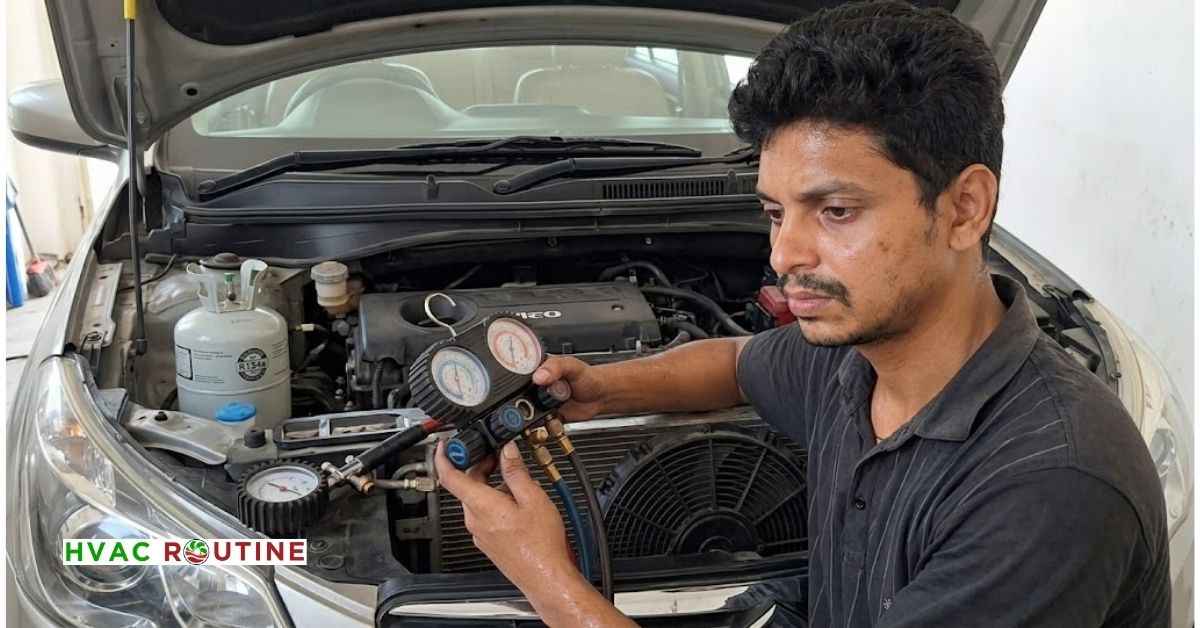
You sit down on a sweltering summer day, start your engine, and turn the dial to max cool. Instead of a refreshing chill, a blast of hot air hits your face, leaving you instantly wondering, “Why is my AC not blowing cold air in my car?“
As someone who spends a lot of time working on HVAC units and electrical cooling systems, I see this exact frustration all the time. Just last week, a driver came to me after their AC completely quit during a long highway trip. They were totally convinced their expensive compressor was dead. After testing the electrical circuit, it turned out to be a simple ten-dollar blown relay.
Automotive heating and cooling systems rely on a closed loop of refrigerant, electrical controls, and mechanical parts to keep you comfortable. Finding the exact cause takes a little patience, but you can track it down yourself. This guide breaks down exactly how to find the problem, starting with simple visual checks before moving on to electrical and pressure issues.
Safety Warnings & Tools Required
Before you open the hood, keep safety in mind. The Environmental Protection Agency explicitly states that venting Freon into the atmosphere is illegal and harms the ozone layer. Always wear safety goggles and heavy-duty gloves when you work near AC lines, as pressurized refrigerant causes severe frostbite upon skin contact. Keep your hands away from moving engine belts and cooling fans while the engine runs.
To diagnose the system properly, you will need a few basic items:
- A digital multimeter to test relays, fuses, and sensors.
- An AC manifold gauge set to read low and high-side system pressure.
- A UV leak detection flashlight and compatible dye.
- A replacement cabin air filter for your specific vehicle.
- A heavy-duty flashlight to check belts and wiring.
What You'll Learn ⭐⭐⭐⭐⭐
- How Your Car AC Actually Works (The Short Version)
- Why Is My AC Not Blowing Cold Air In My Car? A Quick Symptom Checker
- Perform Immediate Checks Without Tools
- Check the Serpentine Drive Belt
- Diagnose Electrical and Airflow Failures
- Look for a Bad AC Relay or Blown Fuse
- Identify Refrigerant Leaks and Pressure Problems
- Step-by-Step Fixes to Restore Cold Air
- Know When to Call an Automotive Professional
- Real-World Troubleshooting Questions Answered
- Wrapping Up Your AC Repair Journey
How Your Car AC Actually Works (The Short Version)
Before you start pulling fuses, it helps to know what happens when you press the AC button. Your car uses a basic refrigeration cycle. The compressor squeezes low-pressure gas into hot, high-pressure gas. This hot gas travels to the condenser sitting in front of your radiator, where outside air cools it into a high-pressure liquid.
Next, this liquid pushes through a tiny expansion valve, dropping the pressure rapidly and turning it freezing cold. Finally, the cold liquid flows into the evaporator core inside your dashboard. Your blower motor pushes cabin air over this freezing core, giving you cold air, and the refrigerant returns to the compressor to start the loop over again.
Why Is My AC Not Blowing Cold Air In My Car? A Quick Symptom Checker
Use this quick checklist to narrow down the most likely problem based on what you actually feel in the cabin.
- You feel strong air, but it blows hot: You likely have a compressor issue, a slipping belt, or low refrigerant.
- You feel absolutely no air coming from the vents: You have a broken blower motor, a blown fuse, or a failed blower motor resistor.
- You smell a nasty, musty odor: You have mold growing on your evaporator core or a filthy cabin air filter.
- The air blows cold, then turns hot at a stoplight: Your condenser cooling fan stopped working.
Perform Immediate Checks Without Tools
You can perform these beginner-friendly checks in your driveway right now without spending a dime on diagnostic tools.
Inspect the Cabin Air Filter for Blockages
A severely clogged cabin filter restricts airflow directly over the cold evaporator core. This blockage makes the air feel weak or surprisingly warm coming out of your vents. If you turn on the air and immediately notice a sour, moldy smell, this filter is usually the culprit.
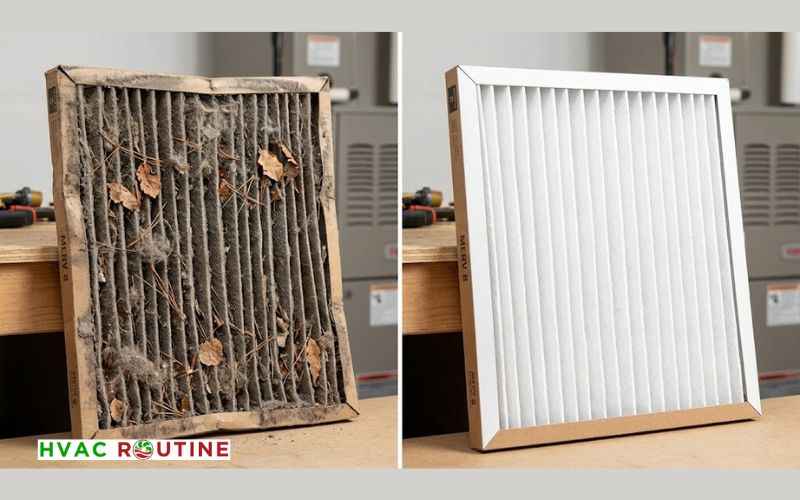
Many drivers completely forget this filter exists right behind the glove box. You should change the filter every 15,000 miles to keep the air blowing strong and smelling fresh.
(Pro Tip: Insert an original photo here of you holding a dirty, leaf-covered cabin filter next to a brand new white one to show the reader the stark difference.)
Check the Serpentine Drive Belt
Your AC compressor does not spin on its own; it relies on the engine’s main serpentine drive belt. Grab a flashlight and look at the thick rubber belt at the front of your engine.
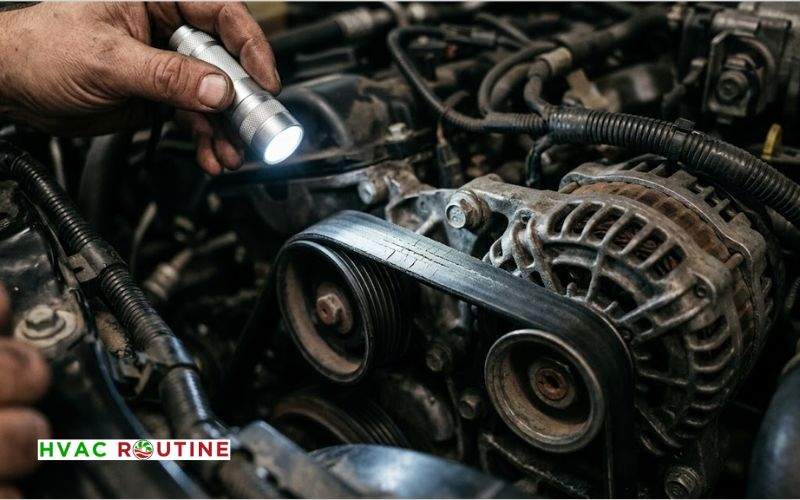
If the belt looks cracked, heavily glazed, or feels loose because of a weak tensioner pulley, it will slip. A slipping belt cannot turn the compressor fast enough to build the high pressure needed for cold air.
Check the AC Compressor Clutch Not Engaging
Start the car, turn the AC to max, pop the hood, and look closely at the front of the compressor pulley. You should hear a distinct click and see the center plate of the pulley start to spin rapidly. If you see the AC compressor clutch not engaging, the system will not circulate refrigerant at all, leaving you with nothing but warm air.
Look at Your Dashboard Temperature Gauge
Your car’s Engine Control Unit (ECU) acts as the brain of the vehicle, and its main job is to protect the engine. If your engine starts to overheat due to a coolant leak or a bad radiator, the ECU will automatically cut power to the AC compressor. It does this to reduce the mechanical load on the engine. If your dashboard temperature gauge reads near the red zone, fix the overheating issue first, and your AC will likely come back to life.
Diagnose Electrical and Airflow Failures
Many people assume they have a freon leak in car AC systems right away. Smart mechanics always check the power supply and sensors first to save time and money.
Listen for Blower Motor Failure
Put your key in the ignition, turn the engine on, and crank the fan speed to the highest setting. If you hear total silence and feel absolutely zero air pushing through the vents, your blower motor likely died. Sometimes the motor works perfectly on high speed but fails entirely on low speeds. This specific symptom usually means you just need to replace the blower motor resistor under the dashboard.
Test if the Condenser Cooling Fan Not Working
Your condenser sits right in front of the radiator and needs constant airflow to remove heat from the hot refrigerant. Look at the plastic fans behind the front grille while the AC runs.
If you spot a condenser cooling fan not working, the hot refrigerant stays hot, which blows warm air into the cabin. Driving with a broken condenser fan also creates a massive risk for your vehicle, as your engine can easily overheat in stop-and-go traffic.
Look for a Bad AC Relay or Blown Fuse
Open your main power distribution box under the hood. A blown fuse stops power from reaching the compressor entirely. You might just have a bad AC relay causing the system shutdown. You can easily swap the AC relay with the horn relay—if they share the exact same part number—to test the circuit for free.
Inspect the Ambient Air Temperature Sensor
Modern cars rely heavily on sensor data. You have a small ambient air temperature sensor mounted behind your front grille. If this sensor breaks and incorrectly tells the computer that it is minus 40 degrees outside, the system will lock out the compressor to prevent freezing. If your dashboard outdoor temperature display reads an insanely low number on a hot summer day, you found your problem.
Identify Blend Door Actuator Issues
Your blend door is a small plastic flap inside the dashboard that separates the hot heater core from the cold evaporator. A stuck blend door actuator motor constantly mixes hot engine coolant air with your cold AC air. This failure creates a lukewarm breeze inside the cabin even if all the under-hood cooling parts work perfectly.
Identify Refrigerant Leaks and Pressure Problems
Automotive air conditioning operates as a completely sealed loop. If your system needs an automotive air conditioning recharge, you definitely have a physical leak somewhere.
Find the Under-Hood Refrigerant Sticker
Before you even think about adding gas, look under the hood. Every modern car has a factory decal stuck to the radiator core support or the underside of the hood. This sticker clearly states exactly what type of refrigerant your car uses and the precise weight capacity the system holds. Never guess these numbers.
Spot a Freon Leak in Car AC Systems
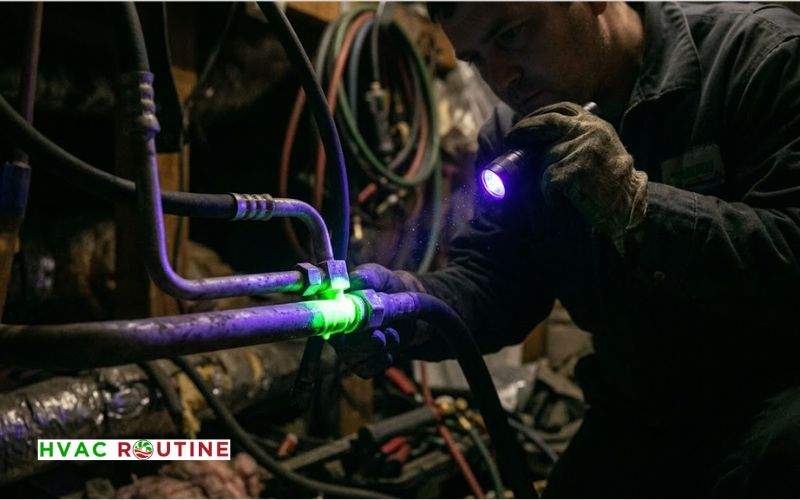
Look for an oily dirt ring around rubber hoses, metal O-ring connections, and the aluminum condenser. For hard-to-find leaks, you can inject UV dye into the low-side port and run the system for 15 minutes. Shine a UV flashlight over the metal components in the dark, and the dye will glow bright green exactly where the gas is escaping.
The Danger of DIY Recharge Kits and “Stop Leak” Cans
I completely understand the temptation to grab a cheap AC recharge kit from the local auto parts store when you are sweating in the driver’s seat. However, many of these cans contain a chemical called “Stop Leak” designed to swell up rubber parts to seal holes.
Please avoid these products completely. I have seen these chemicals harden inside delicate thermal expansion valves, completely destroying the entire system. These gooey chemicals also gum up expensive AC recovery machines, meaning many professional repair shops will flat-out refuse to work on your car if you use them.
Use a Gauge to Check R134a or R1234yf Levels
Hook up an AC manifold gauge to the low-pressure port to read the exact system pressure. Older cars run on R134a refrigerant, while vehicles made after 2015 often feature an R1234yf system, which requires completely different gauge fittings.
Never blindly dump gas into the system without reading the pressure dial first. High pressure forces the compressor safety switch to shut the system down completely. Whenever someone asks me why is my AC not blowing cold air in my car after using a store-bought can, I usually hook up my gauges and find they severely overcharged the system.
Step-by-Step Fixes to Restore Cold Air
Here are the practical, hands-on steps you can take today to get your system cooling again.
[Embed Video: A practical 3-minute YouTube tutorial showing how to hook up manifold gauges and safely inject UV dye into an automotive AC system.]
1. Replace the Cabin Air Filter: Open the glove box, squeeze the plastic sides to drop the door down, and pull out the old filter tray. Slide the new one in, making sure the airflow arrows point downward.
2. Swap the AC Relay: Find the fuse box diagram printed on the inside lid, pull the clutch relay straight up, and plug in a matching relay from a non-critical component like the horn or wipers.
3. Find the Leak with UV Dye: Attach the dye injector to the low-side port, squeeze the trigger, and use your blacklight to inspect all metal refrigerant lines around the engine bay.
4. Clean the Evaporator: Spray a dedicated automotive AC foaming cleaner directly into the evaporator drain tube underneath the car to kill mold and eliminate musty smells.
Know When to Call an Automotive Professional
Some repairs require expensive recovery machines and certified mechanics. Take your car to a professional shop if the system requires full evacuation and vacuuming to pull out trapped moisture.
You must visit a mechanic if you spot silver metal shavings inside the refrigerant lines or valves. Metal shavings mean your compressor exploded internally, and you need a full system flush. You should also hire a pro if the leak sits deep inside the dashboard at the evaporator core, as this often requires removing the entire steering wheel and dash assembly.
Real-World Troubleshooting Questions Answered
What causes a car AC blowing hot air intermittently?
This specific problem usually points to a freezing evaporator core caused by a low refrigerant charge. A faulty thermal expansion valve also creates this exact symptom by starving the core of liquid. When the core freezes into a solid block of ice, air cannot pass through the aluminum fins. Turning the AC off for ten minutes melts the ice entirely, and the system then blows cold again temporarily until it freezes over a second time.
Do I need to replace my AC gas regularly like engine oil?
You absolutely do not need to replace your refrigerant on a schedule. Your air conditioning is a fully sealed loop. If the metal lines never develop a physical leak, the original factory gas will last for the entire lifespan of the vehicle. Mechanics only add gas when a broken component or loose O-ring allows the original refrigerant to escape.
How much does fixing a broken car AC cost?
The final bill depends entirely on the broken component you need to replace, plus the type of gas your car uses. R1234yf gas costs significantly more than older R134a gas, making modern car recharges much more expensive. Here is a quick breakdown of average repair costs you can expect at a shop.
| Broken Component | Estimated Repair Cost |
| Cabin Air Filter | $15 – $30 |
| Bad AC Relay or Fuse | $10 – $20 |
| Blower Motor Resistor | $40 – $80 |
| Professional R134a Recharge | $150 – $200 |
| Professional R1234yf Recharge | $250 – $350+ |
| Full Compressor Replacement | $800 – $1,200+ |
Wrapping Up Your AC Repair Journey
You now know exactly how to track down the root cause of your AC troubles without guessing. Start your diagnosis with simple visual inspections like the drive belt and cabin filter, then move on to electrical components like fuses, relays, sensors, and fans.
End your inspection by checking for refrigerant leaks and testing system pressure with proper gauges. Regular maintenance prevents catastrophic mechanical failures down the road, and staying proactive keeps you cool and comfortable on every summer drive.

1 thought on “Why Is My AC Not Blowing Cold Air In My Car? 11 Causes & Quick Fixes”